Fire Extinguisher Maintenance Explained: Inspection, Testing and Servicing
01 Oct 2026 | By Danielle Naylor
Fire extinguishers require more than annual servicing to remain effective in an emergency. This guide explains fire extinguisher maintenance requirements, including routine inspections, professional servicing, testing, legal responsibilities, and the role of BS 5306 in supporting fire safety compliance.
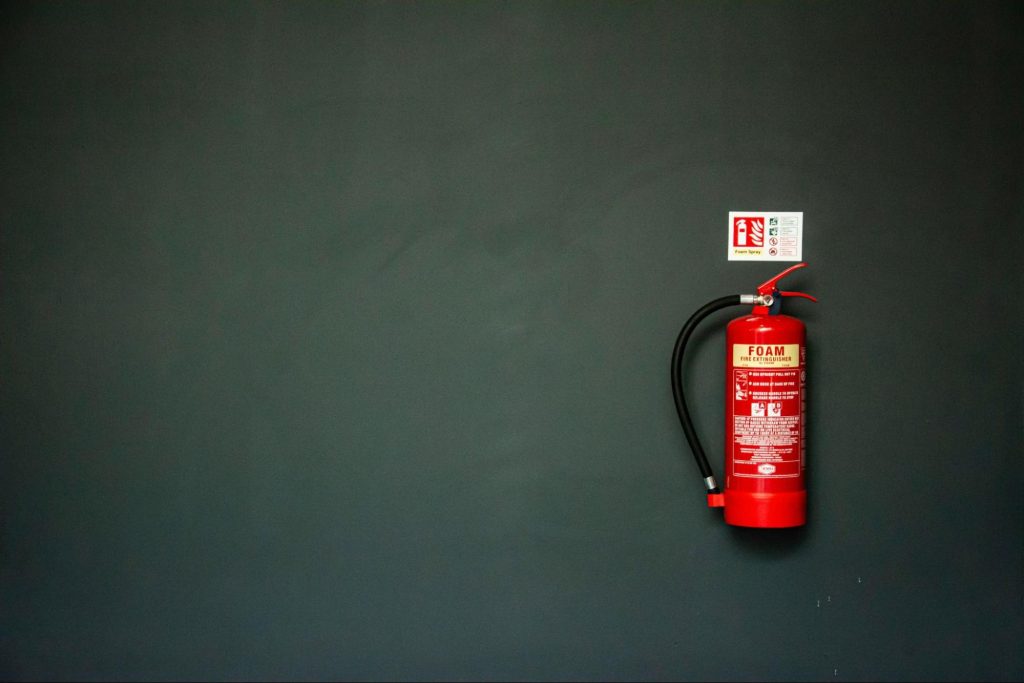
Housing associations, managing agents, employers, landlords, and Responsible Persons must ensure portable fire extinguishers remain available for use and capable of operating correctly in the event of a fire. Routine inspection, testing, and servicing form an important part of maintaining fire safety compliance and protecting building occupants.
This article explains the legal requirements for fire extinguisher maintenance, the responsibilities of Responsible Persons, the role of British Standards, and the differences between routine inspections, testing, and professional servicing.
Why Is Fire Extinguisher Maintenance Important?
Portable fire extinguishers are designed to control or extinguish small fires before they develop into larger incidents. However, damaged, discharged, or poorly maintained extinguishers may not operate correctly when they are needed most.
Routine fire extinguisher maintenance helps Responsible Persons:
- Verify fire extinguishers remain available for use
- Identify damage, corrosion, or missing equipment
- Confirm pressure indicators remain within the correct operating range
- Support planned maintenance programmes
- Demonstrate compliance with fire safety legislation
- Maintain accurate inspection and servicing records
Routine maintenance also forms part of a wider programme of fire safety testing alongside Fire Risk Assessments, fire alarm testing, emergency lighting testing, and fire door inspections.
What Does Fire Extinguisher Maintenance Include?
Fire extinguisher maintenance involves more than an annual service. Responsible Persons should ensure routine fire extinguisher inspections, professional servicing, and periodic testing are carried out to help confirm extinguishers remain fully charged, in good working condition, and ready for use in an emergency.
These typically include:
- Routine visual inspections
- Annual servicing
- Extended servicing
- Pressure testing where required
- Replacement of damaged or expired extinguishers
- Maintenance records and certification
Each activity plays a different role in ensuring portable fire extinguishers remain suitable for use.
What Do Fire Safety Regulations Require?
Where fire safety legislation applies, Responsible Persons must ensure portable fire extinguishers provided for fire safety remain available for use and are maintained in efficient working order.
While legislation establishes the legal duty, British Standard BS 5306-3 provides recognised recommendations for the commissioning, inspection, servicing, and maintenance of portable fire extinguishers.
England and Wales
Fire extinguisher maintenance responsibilities in England and Wales are primarily governed by the Regulatory Reform (Fire Safety) Order 2005. The Order requires the Responsible Person to maintain fire safety equipment in an efficient state, in efficient working order, and in good repair where it is provided for fire safety purposes.
The Fire Safety Act 2021, Building Safety Act 2022, and Fire Safety (England) Regulations 2022 complement these wider fire safety responsibilities within relevant residential buildings.
Scotland
Fire safety duties in Scotland are governed by the Fire (Scotland) Act 2005 and the Fire Safety (Scotland) Regulations 2006.
These require duty holders to maintain appropriate fire safety measures, including portable fire extinguishers where they are provided.
What Does BS 5306 Recommend?
While fire safety legislation establishes the legal duties of Responsible Persons, BS 5306 provides recognised guidance on the selection, positioning, commissioning, inspection, servicing, and maintenance of portable fire extinguishers.
In particular, BS 5306-3 covers the commissioning, servicing, and maintenance of portable fire extinguishers, while BS 5306-8 provides recommendations on their selection and positioning.
The standard recommends a planned programme of routine visual inspections, annual servicing, and periodic extended servicing or pressure testing depending on the extinguisher type.
For a detailed breakdown of recommended inspection and servicing intervals, read our article How Often Should Fire Extinguishers Be Inspected?
Need Fire Extinguisher Inspection Services?
Osterna supports housing associations, managing agents, and large private landlords with professional fire extinguisher inspections and wider fire safety compliance services across the UK.
Our inspection programmes help organisations identify and record defects, maintain accurate inspection records, and determine where further action by a competent servicing provider may be required.
Maintaining Fire Extinguisher Compliance:What’s the Difference Between Inspection, Testing and Servicing?
Although the terms are often used interchangeably, they describe different maintenance activities. Each plays a separate role in keeping portable fire extinguishers available for use and capable of operating correctly during an emergency.
| Activity | Who Carries It Out? |
| Fire extinguisher inspection | Responsible Person, nominated representative, or competent inspection provider |
| Fire extinguisher servicing | Competent fire extinguisher servicing technician |
| Fire extinguisher testing | Competent fire extinguisher servicing technician |
Osterna provides fire extinguisher inspections and defect reporting, rather than extinguisher servicing, repairs, extended servicing, or pressure testing. Where an inspection identifies an issue requiring further action, the defect is recorded so that the Responsible Person can arrange appropriate remedial work with a competent servicing provider.
For more information about routine visual checks, read our article Fire Extinguisher Inspection Checklist: What’s Included?
Who Is Responsible for Fire Extinguisher Maintenance?
Responsibility typically rests with the Responsible Person.
Depending on the premises, this may include:
- Employers
- Landlords
- Housing associations
- Managing agents
- Freeholders
- Local authorities
A competent provider may be appointed to carry out inspections, while specialist servicing providers may be required for annual servicing, repairs, extended servicing, and pressure testing. The Responsible Person remains responsible for ensuring appropriate fire safety measures are maintained.
Responsible Persons should retain commissioning dates, servicing records, maintenance certificates, and inspection findings to support ongoing compliance and future maintenance planning.
Common Fire Extinguisher Defects
Common defects identified during routine inspections and servicing include:
- Low pressure or pressure gauges outside the operating range
- Dents, corrosion, or damage to the cylinder
- Damaged hoses, horns, or nozzles
- Missing safety pins or broken tamper seals
- Missing or out-of-date service labels
- Missing or damaged inspection tags
- Discharged or partially discharged extinguishers
- Obstructed access preventing extinguishers from being used quickly
Where an inspection identifies defects, these should be clearly recorded and appropriate remedial action arranged. Osterna’s inspection service identifies and reports defects so Responsible Persons can determine the next steps and, where necessary, appoint a competent servicing provider to complete repairs, servicing, or replacement.
When Should a Fire Extinguisher Be Replaced?
Fire extinguishers should not automatically be replaced at a fixed age. Instead, their continued suitability depends on their condition, servicing history, and the findings of routine inspections and maintenance.
Responsible Persons should arrange replacement where a fire extinguisher:
- Has sustained significant damage, corrosion, or other defects that cannot be repaired
- Fails an annual service, extended service, or hydraulic pressure test
- Has been discharged and cannot be economically recharged
- Is no longer suitable for the fire risks within the premises
- Has reached the end of its recommended service life in accordance with the manufacturer’s guidance
Even where an extinguisher appears to be in good condition, routine inspections and professional servicing remain important to confirm it is safe, reliable, and ready for use in an emergency.
Where defects are identified, Responsible Persons should arrange appropriate repairs or replacement without unnecessary delay and maintain records of the actions taken as part of their wider fire safety management programme.
What Happens if Fire Extinguisher Maintenance Is Neglected?
Where fire safety legislation applies, Responsible Persons who fail to maintain portable fire extinguishers may face enforcement action. Depending on the circumstances, this may include:
- Alterations notices
- Enforcement notices
- Prohibition notices
- Criminal prosecution
- Unlimited fines
Poorly maintained extinguishers may also fail during an emergency, preventing occupants from tackling small fires safely and increasing the risks to people and property.
Portable fire extinguishers form one part of wider fire safety responsibilities. Routine inspections help Responsible Persons identify visible defects, maintain accurate records, and determine when specialist servicing or remedial action may be required.
Osterna supports housing associations, managing agents, local authorities, employers, and large private landlords across the UK with fire extinguisher inspections and defect reporting, alongside Fire Risk Assessments, fire alarm testing, emergency lighting testing, fire door inspections, asset testing, and wider building compliance services.
Get in touch with the Osterna team today.
Frequently Asked Questions
Yes. Where fire safety legislation applies, Responsible Persons must ensure portable fire extinguishers provided for fire safety are maintained in an efficient state, in efficient working order, and in good repair.
While the Regulatory Reform (Fire Safety) Order 2005 establishes the legal duty in England and Wales, BS 5306-3 provides recognised recommendations for the commissioning, inspection, servicing, and maintenance of portable fire extinguishers.
BS 5306-3 recommends that portable fire extinguishers are serviced at least annually by a competent person. In addition, Responsible Persons should carry out routine visual inspections, while certain extinguisher types require extended servicing or hydraulic pressure testing at longer intervals. The appropriate maintenance programme should always reflect the type of extinguisher and the manufacturer’s guidance.
Routine visual inspections may be carried out by the Responsible Person, a nominated representative with appropriate instruction, or a competent inspection provider. Annual servicing, extended servicing, repairs, and pressure testing require the appropriate level of specialist competence.
Osterna is BAFE-audited and provides professional fire extinguisher inspections and defect reporting. Our service does not include extinguisher servicing, repairs, extended servicing, or pressure testing. Where further action is identified during an inspection, the defect is reported so the Responsible Person can arrange the appropriate remedial work.
Routine inspections are visual checks carried out between servicing visits to confirm extinguishers remain accessible, undamaged, correctly pressurised, and ready for use.
Servicing is a more detailed examination completed by a competent person. It involves inspecting the extinguisher’s condition and operation, replacing components where necessary, updating maintenance records, and confirming the extinguisher remains suitable for continued use.
No. Maintenance requirements vary depending on the type of extinguisher. Water, foam, powder, wet chemical, and CO₂ extinguishers each have different servicing and testing requirements, which are set out in BS 5306-3 and the manufacturer’s instructions.
Related articles
-
What Is a Person-Centred Fire Risk Assessment?
Some residents require additional fire safety measures beyond those identified in a standard Fire Risk Assessment. This guide explains what a Person-Centred Fire Risk Assessment is, when it may be appropriate, and how it helps organisations manage individual fire risks while supporting compliance.
-
How Often Should Fire Alarms Be Tested?
Routine fire alarm testing is an important part of fire safety compliance. This guide explains testing frequencies, legal responsibilities, record-keeping, and the role of BS 5839 in maintaining compliant fire alarm systems.
-
What Does a Fire Door Inspection Include?
A fire door can appear compliant, while hidden defects reduce its ability to resist fire and smoke. Discover what a fire door inspection includes, what inspectors check, and how inspection findings help Responsible Persons prioritise remedial works and demonstrate compliance.
-
What Is a Fire Door Inspection?
Fire doors can deteriorate over time without obvious signs of damage, creating compliance and safety risks. Learn what a fire door inspection is, when it should be arranged, and how it helps Responsible Persons manage fire safety across residential buildings.
-
Person-Centred Fire Risk Assessment (PCFRA) vs Standard Fire Risk Assessment: What’s the Difference?
A standard Fire Risk Assessment and a Person-Centred Fire Risk Assessment serve different purposes, but many organisations need both. This guide explains the key differences, when each assessment is appropriate, and how they work together to support effective fire safety management and compliance.
-
When Does a Fire Risk Assessment Recommend a Variation Order?
Costly fire alarm upgrades are not always the most appropriate outcome of a Fire Risk Assessment. Learn when a Fire Alarm Variation Order may provide a proportionate, risk-based solution and how it supports residential fire alarm compliance.
-
How Long Does a Fire Risk Assessment Last?
Many organisations assume a fire risk assessment remains valid until the next scheduled review. In reality, building changes, evolving risks, and regulatory expectations can all affect whether an assessment remains suitable and sufficient. This guide explains when a fire risk assessment should be reviewed and the warning signs that it may no longer reflect the building’s current risks.
-
What Should a Fire Risk Assessment Include?
A fire risk assessment that overlooks key risks can leave organisations exposed to significant compliance and safety issues. This guide explains what a suitable and sufficient fire risk assessment should contain and how to identify whether an assessment provides the information needed to manage fire safety effectively.
-
How Often Should a Fire Risk Assessment Be Carried Out?
Many organisations review fire risk assessments on a fixed schedule. The challenge is that review frequency should reflect the building’s risks, not simply the calendar. This guide explains how Responsible Persons can develop review programmes that support effective fire safety management and compliance.
-
How Often Should Fire Doors Be Inspected?
Meeting the minimum legal requirements is not always enough to demonstrate effective fire door management. This guide explains how often fire doors should be inspected, when additional checks may be appropriate, and how housing providers can take a risk-based approach to compliance.