Fire Risk Assessment for High-Rise Buildings
22 Oct 2026 | By Ron Fellowes MIFSM, GIFireE, CertNCRQ
Fire risk assessments for high-rise residential buildings must consider evacuation arrangements, external walls, communal areas and building-specific fire hazards. Assessments should cover and how property and compliance teams can manage findings across complex residential buildings.

A fire risk assessment for a high-rise residential building follows the same core process as any other fire risk assessment, but must account for additional risks. These include longer escape routes, fire compartmentation, external walls, firefighting facilities and evacuation arrangements.
In England, residential buildings at least 18 metres tall or seven storeys high are also subject to additional duties under the Fire Safety (England) Regulations 2022. This article explains what assessments should cover, who is responsible, when they should be reviewed and how property managers can address identified risks.
What Is Different About a Fire Risk Assessment for a High-Rise Building?
The basic purpose of a Fire Risk Assessment does not change because a building is taller. The assessment must still identify fire hazards, consider people at risk, evaluate existing precautions and identify further action where necessary.
The difference lies in the building and the potential consequences of failures in its fire safety arrangements.
A high-rise residential building can involve:
- Large numbers of residents across multiple floors
- Longer and more complex escape routes
- Compartmentation designed to limit fire and smoke spread
- Flat entrance and communal fire doors
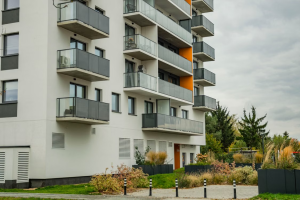
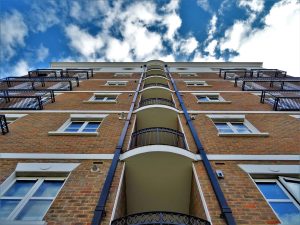
- External wall systems and balconies
- Smoke control systems
- Firefighting shafts, lifts and other firefighting facilities
- Dry or wet risers
- Different evacuation strategies
- Residents who may need assistance to evacuate
- Multiple contractors, maintenance teams and responsible parties
The assessment therefore needs to consider how these measures work together. A defect that appears isolated can have wider implications if it affects compartmentation, an escape route or the building’s fire evacuation strategy.
What Counts as a High-Rise Residential Building?
In England, the Fire Safety (England) Regulations 2022 define a high-rise residential building as one containing two or more sets of domestic premises that is:
- At least 18 metres high, or
- At least seven storeys
The threshold brings additional fire safety duties, but it is not the point at which the requirement for a Fire Risk Assessment begins. Fire Risk Assessment duties apply more widely to multi-occupied residential buildings covered by the Fire Safety Order.
Buildings meeting the relevant criteria may also fall within the higher-risk building regime under the Building Safety Act 2022.
Some high-rise residential buildings also fall within the higher-risk building regime under the Building Safety Act 2022. In England, this generally applies to buildings at least 18 metres tall or seven storeys high, with at least two residential units. The definitions overlap but are not identical.
Property managers and landlords should therefore establish which requirements apply to each building, rather than using height as the sole measure of responsibility.
Do High-Rise Buildings Need More Frequent Fire Risk Assessments?
There is no separate legal timeframe for Fire Risk Assessments simply because a building is over 18 metres or seven storeys. The frequency should reflect the building’s risk, complexity and any changes that could affect fire safety.
The government’s Fire Safety in Purpose-Built Blocks of Flats guidance provides useful indicative intervals:
- Low-risk, modern low-rise blocks: A review every two years and a new FRA every four years may be sufficient.
- Higher-risk blocks and those over four storeys: An annual review may be more appropriate, with a new FRA every three years.
- Highest-risk buildings: A new FRA every year may be appropriate.
These are recommended intervals rather than fixed legal deadlines. An earlier review may be needed after a fire, significant building works, changes to the fire strategy or other developments that could affect the existing assessment.
Read How Often Should a Fire Risk Assessment Be Carried Out? for more detail on review periods and reassessment triggers.
Who Is Responsible for a High-Rise Fire Risk Assessment?
The Responsible Person must make sure a suitable and sufficient Fire Risk Assessment is carried out and kept up to date. In a block of flats, this may be the freeholder, landlord, property owner, managing agent or another organisation with control of the common parts.
More than one Responsible Person may have duties within the same building. Landlords, property owners and organisations responsible for high-rise buildings should therefore make sure responsibilities for arranging the FRA, managing identified actions and maintaining fire safety measures are clearly defined.
Clear ownership helps prevent actions from being missed or delayed when responsibilities are shared between different organisations, managing agents or contractors.
Need a Fire Risk Assessment for Your High Rise Building?
Osterna delivers professionally accredited Fire Risk Assessments for housing associations, managing agents, and large private landlords across the UK.
What Should a High-Rise Fire Risk Assessment Cover?
The assessment should reflect the design, condition, occupation and fire strategy of the individual building. Key areas include:
Compartmentation and Fire Doors
The assessment should consider whether compartmentation and fire doors can restrict the spread of fire and smoke between flats, floors and common areas.
Visible damage, defective fire doors and unsealed service penetrations may require action. Recurring defects can also indicate wider issues with maintenance or contractor controls.
Escape Routes and Evacuation
Escape routes should remain protected and support the building’s evacuation strategy.
The assessment should identify anything that could compromise these arrangements. Residents should also understand the evacuation strategy and what to do in the event of a fire.
Residential Evacuation Plans
High-rise residential buildings in England are subject to additional evacuation planning duties under the Fire Safety (Residential Evacuation Plans) (England) Regulations 2025. These include person-centred fire risk assessments (PCFRAs) and evacuation planning arrangements for eligible residents who may need assistance during a fire.
Fire Safety Systems
The FRA should consider relevant systems such as smoke control, emergency lighting, alarms, sprinklers, risers and firefighting or evacuation lifts.
Individual systems still require appropriate inspection, testing and maintenance. Property teams need clear processes for escalating faults and tracking remedial work through to completion.
Read our article: What Should a Fire Risk Assessment Include? for a broader breakdown of the areas covered during an assessment.
How Should External Wall Risks Be Managed?
The Fire Risk Assessment must consider the building’s external walls, including relevant cladding, balconies and other attachments.
A detailed Fire Risk Appraisal of External Walls (FRAEW) may be required where the external wall construction or potential for fire spread requires specialist assessment. An FRAEW does not replace the main Fire Risk Assessment. Its findings should feed into the wider assessment and the building’s fire safety action plan.
Landlords, property owners and managing agents should also make sure relevant external wall information remains accessible and up to date alongside other building safety records.
What Additional Responsibilities Apply to High-Rise Buildings?
Under the Fire Safety (England) Regulations 2022, Responsible Persons for high-rise residential buildings have additional duties covering building plans, external wall information, secure information boxes, wayfinding signage and checks of specified firefighting equipment.
These requirements should form part of ongoing building management alongside the Fire Risk Assessment.
What Should Happen After a High-Rise FRA?
A high-rise Fire Risk Assessment can identify actions across different floors, systems, and areas of responsibility. Landlords, property owners, and organisations responsible for the building need a clear process for prioritising and completing them.
Actions should be managed with:
- A clear priority
- An accountable owner
- A target completion date
- Any required specialist investigation
- Interim measures where necessary
- Evidence of completion
Recurring issues also deserve attention. Repeated fire door defects may indicate a maintenance problem, while compartmentation issues following refurbishment could point to weaknesses in contractor controls.
A high-rise FRA’s recommendations should be transferred into a live action plan, prioritised according to risk, and monitored until every identified action has been completed. A structured action plan helps turn the FRA into a practical tool for reducing risk rather than another compliance document to file away.
Read What Happens After a Fire Risk Assessment? for more detail on managing actions and maintaining compliance after the assessment.
What Happens if Fire Risk Assessment Requirements Are Not Met?
The Responsible Person must carry out and regularly review a suitable and sufficient Fire Risk Assessment. The assessment must also be recorded in full.
A fire and rescue authority can inspect the FRA and take enforcement action where fire safety duties have not been met. An enforcement notice can require identified problems to be addressed, while a prohibition notice can restrict or prevent the use of a building where the fire risk is sufficiently serious.
Serious breaches of the Fire Safety Order can lead to prosecution. Depending on the offence and the court, penalties can include an unlimited fine and, for more serious offences, up to two years’ imprisonment.
Managing Fire Risk in High-Rise Residential Buildings
A Fire Risk Assessment should give landlords, property owners and responsible organisations a clear understanding of the building’s fire safety risks and the actions needed to address them.
FRA findings should inform maintenance, system testing, contractor management, resident communication and remedial work. Clear priorities and defined responsibilities make it easier to address outstanding risks and prevent recurring issues from being overlooked.
Osterna supports housing associations, managing agents and large private landlords with Fire Risk Assessments and fire safety compliance across residential portfolios.
Speak to the Osterna team about Fire Risk Assessments for your high-rise buildings.
Frequently Asked Questions
Requirements vary across the UK. In England, high-rise residential buildings have additional duties covering areas such as building and floor plans, external wall information, secure information boxes, wayfinding signage and checks of specified firefighting equipment. Higher-risk buildings may also fall under the Building Safety Act 2022.
BS 9792:2025 is the current British Standard for Fire Risk Assessments in housing. It provides recommendations for carrying out and recording Fire Risk Assessments in residential premises. It replaced PAS 79-2:2020.
The Responsible Person must make sure a suitable and sufficient Fire Risk Assessment is carried out and kept up to date. This may be a landlord, freeholder, managing agent or another organisation with control of the common parts. More than one Responsible Person can have duties within the same building.
A Fire Risk Assessment does not generally extend into the domestic areas of individual flats. However, the Fire Safety Order covers flat entrance doors between domestic premises and common parts, as well as the building’s structure, external walls and common areas.
Residents can help identify fire safety concerns, including damaged fire doors, blocked escape routes and recurring hazards. Additional requirements apply to evacuation planning for residents who may need assistance.
Related articles
-
How Often Do Landlords Need to Renew Their EPC?
Expired EPCs can delay lettings and create avoidable compliance issues, particularly across larger residential portfolios. This article explains when landlords need a new EPC, when early renewal may be worthwhile, and how planned assessments can keep certificates up to date.
-
Who’s Responsible for the EPC – Landlord or Tenant?
Responsibility for obtaining and providing an Energy Performance Certificate (EPC) generally rests with the landlord. This article explains who pays for an EPC, who renews it, tenants’ responsibilities, and how landlords can maintain compliance with current EPC legislation.
-
Where Should Smoke Alarms Be Positioned?
Correct positioning of smoke alarms is essential for reliable fire detection and occupant protection. This guide explains where alarms should be installed, where they should be avoided, the legislation and Building Regulations that influence alarm positioning, and common installation mistakes.
-
Are Fire Risk Assessment Recommendations Mandatory?
Fire Risk Assessment recommendations are not automatically legal requirements, but they should never be dismissed as optional. Responsible Persons should prioritise and manage them and maintain compliance with UK fire safety legislation.
-
Fire Risk Assessment for Block Management
Fire Risk Assessments are a key part of managing fire safety in residential blocks. This guide explains who is responsible, what an assessment should cover and how managing agents and landlords should manage findings across their portfolios.
-
Fire Risk Assessment for Student Accommodation
Student accommodation presents specific fire safety challenges, from shared kitchens and changing occupancy to evacuation and sleeping risk. A Fire Risk Assessment should cover how universities, landlords and accommodation providers should manage the findings.
-
How to Choose a Fire Risk Assessor
Choosing the right fire risk assessor is essential for effective fire safety management and ongoing compliance. This guide explains what makes a competent fire risk assessor, why experience and third-party certification matter, what questions to ask before appointing a provider, and how to identify a high-quality Fire Risk Assessment.
-
Smoke Alarm Requirements for HMO Landlords
HMO smoke alarm requirements are more complex than those for standard rental properties. This guide explains how HMO fire alarm requirements differ, what landlords need to provide, and how to maintain fire safety compliance.
-
Smoke Vent Testing: A Compliance Guide for Responsible Persons
Smoke vent testing helps verify that Automatic Opening Vents (AOVs) and smoke control systems remain operational throughout the life of a building. This guide explains the legal requirements, British Standards, recommended testing frequencies, Responsible Person duties, and how planned inspection and maintenance support ongoing fire safety compliance.
-
Smoke Alarm Regulations for Landlords
Smoke alarm regulations require landlords to install, test, and maintain smoke and carbon monoxide alarms in qualifying rental properties. This article explains the legal requirements, landlord responsibilities, smoke alarm testing, HMO considerations, and the differences between England and Scotland.