How Often Should Fire Alarms Be Tested?
30 Jul 2026 | By Danielle Naylor
Routine fire alarm testing is an important part of fire safety compliance. This guide explains testing frequencies, legal responsibilities, record-keeping, and the role of BS 5839 in maintaining compliant fire alarm systems.
Housing associations, managing agents, and Responsible Persons cannot assume a fire alarm system will operate correctly during an emergency unless it is tested regularly. Routine fire alarm testing helps identify faults before they compromise early fire detection, put occupants at risk, or create compliance issues.
This article explains how often fire alarm systems should be tested, what the law requires, the role of BS 5839, and how routine testing fits within a wider fire safety management programme.
Why Is Fire Alarm Testing Important?
Fire alarm systems form part of a building’s active fire protection measures. Routine fire alarm testing confirms the system continues to operate as intended and helps identify faults before they affect resident safety or compliance.
Regular fire alarm testing also helps organisations:
- Verify the system remains operational
- Identify faults or damaged devices
- Support planned maintenance programmes
- Demonstrate compliance with fire safety legislation
- Maintain accurate testing records
- Reduce the likelihood of false alarms
Routine testing also forms part of a wider fire safety strategy alongside Fire Risk Assessments, fire door inspections, emergency lighting testing, and planned maintenance. Together, these measures help Responsible Persons maintain effective fire protection across residential buildings.
Need a Fire Risk Assessment?
Osterna delivers professionally accredited Fire Risk Assessments for housing associations, managing agents, and large private landlords across the UK.
What’s the Difference Between Fire Alarm Inspection, Testing, and Servicing?
Routine fire alarm inspection, testing, and servicing each play a different role in maintaining a compliant fire alarm system.
- Fire alarm inspection involves checking the overall condition of the fire alarm system to identify visible defects, faults, damage, or issues that may affect its operation. Inspections may form part of routine fire safety management or be completed during planned maintenance visits.
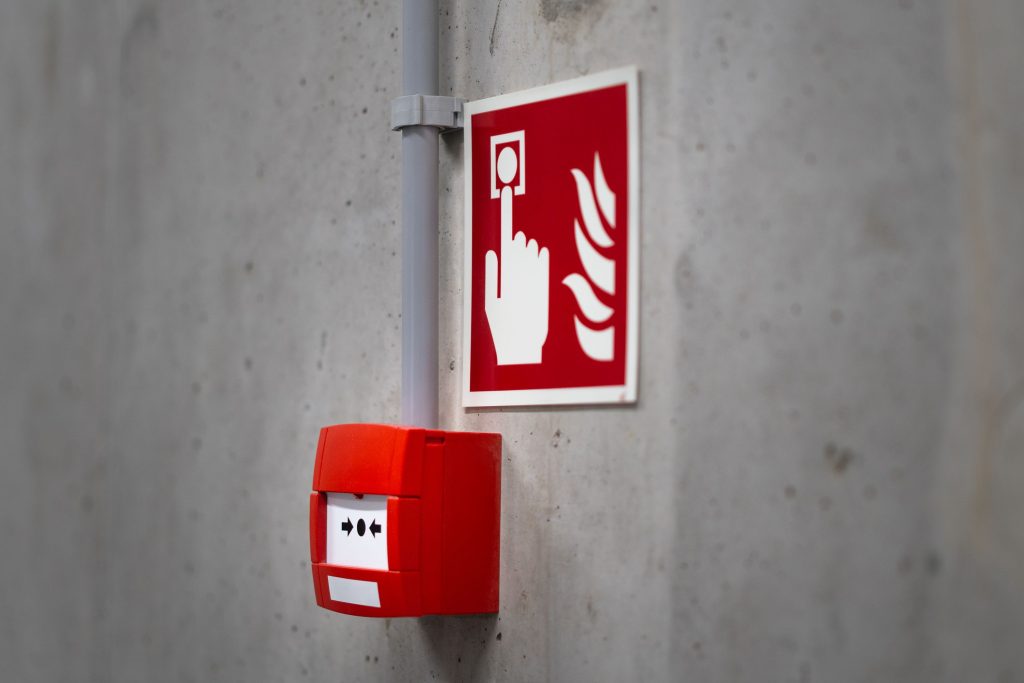
- Fire alarm testing involves regular functional checks, typically carried out by the Responsible Person or a nominated representative, to confirm that the fire alarm system is operating correctly between maintenance visits. This commonly includes activating a manual call point and recording the results in the fire alarm logbook.
- Fire alarm servicing is carried out by a competent person and involves a more detailed examination of the system. This includes inspecting, testing, and maintaining smoke detectors, heat detectors, manual call points, control equipment, power supplies, and other system components to identify faults, complete preventative maintenance, and ensure the system continues to operate in accordance with relevant guidance.
Although the terms are sometimes used interchangeably, they perform different functions. Routine inspections and testing help identify issues between maintenance visits, while regular servicing provides a more comprehensive assessment of the fire alarm system’s condition, performance, and ongoing compliance.
How Often Should Fire Alarm Testing Be Carried Out?
The frequency of fire alarm testing depends on the type of testing being completed and the applicable guidance.
For most residential buildings, good practice includes:
| Activity | Typical Frequency |
| User fire alarm test | Weekly |
| Visual inspection of the control panel | Daily or when the building is occupied |
| Inspection and servicing by a competent engineer | Every six months (or in accordance with the manufacturer’s guidance and BS 5839) |
| Routine maintenance and repairs | As required |
Weekly testing helps confirm that manual call points, sounders, and the control panel remain in working order between planned maintenance visits.
Is Weekly Fire Alarm Testing a Legal Requirement?
Responsible Persons often ask whether weekly fire alarm testing is a legal requirement. While fire safety legislation does not prescribe a specific testing frequency, it does require fire alarm systems to be maintained through a suitable programme of inspection, testing, and servicing.
Recognised guidance, including British Standard BS 5839, provides recommendations for the design, installation, commissioning, inspection, testing, servicing, and maintenance of fire detection and fire alarm systems. It recommends weekly user testing as part of that programme.
What Does a Weekly Fire Alarm Test Involve?
A routine weekly fire alarm test is intended to confirm that the fire alarm system remains operational.
A typical test will include:
- Activating a different manual call point each week where practicable
- Confirming the alarm sounds correctly
- Checking that the control panel operates as expected
- Resetting the system following the test
- Recording the test within the fire alarm logbook
- Investigating and reporting any faults identified
Residents should normally be informed before routine testing takes place to avoid unnecessary concern.
Who Is Responsible for Fire Alarm Testing?
The Responsible Person remains legally responsible for ensuring fire alarm systems are maintained and tested.
Depending on the organisation, this may include:
- Housing associations
- Managing agents
- Freeholders
- Residential management companies
- Landlords responsible for communal areas
Although routine servicing is usually carried out by a competent specialist contractor, legal responsibility for maintaining the system cannot be delegated.
How Long Does Fire Alarm Testing Take?
A routine weekly fire alarm test is usually completed within a few minutes.
The exact duration depends on:
- The size of the building
- The complexity of the fire alarm system
- The number of buildings being tested
- Any faults identified during testing
More detailed inspections and servicing carried out by a competent engineer will generally take longer, particularly within larger residential portfolios.
What Happens If a Fault Is Found?
A fault identified during testing should never be ignored. Even minor issues can prevent a fire alarm system from operating correctly during an emergency, increasing fire safety and compliance risks.
Responsible Persons should arrange appropriate repairs without unnecessary delay, implement interim fire safety measures where necessary, and keep clear records of the actions taken.
Why Is a Fire Alarm Test Log Important?
Responsible Persons should keep a fire alarm test log to record routine testing, identify recurring faults, and demonstrate that fire alarm systems are being appropriately managed.
Accurate records provide an auditable history of testing, support ongoing fire safety management, and help evidence compliance during Fire Risk Assessments, regulator inspections, and internal audits.
A fire alarm test log (also known as a fire alarm logbook) will typically record:
- The date and time of the test
- The manual call point or device tested
- The name of the person carrying out the test
- Whether the fire alarm system operated correctly
- Any faults or defects identified
- Remedial actions taken or arranged
- Confirmation that the system was reset and returned to normal operation
Housing associations, managing agents, and Responsible Persons should keep complete and up-to-date fire alarm testing records so they can plan maintenance, demonstrate compliance, and provide an auditable testing history.
What Does Fire Safety Legislation Require?
Fire safety legislation requires Responsible Persons to ensure fire alarm systems are appropriately maintained where the legislation applies.
While the legislation does not prescribe a specific testing frequency, Responsible Persons can use recognised guidance to develop an appropriate testing programme for their buildings.
England and Wales
Relevant legislation includes:
- Regulatory Reform (Fire Safety) Order 2005
- Fire Safety Act 2021
- Building Safety Act 2022
- Fire Safety (England) Regulations 2022
Scotland
Fire safety duties in Scotland are governed by:
- Fire (Scotland) Act 2005
- Fire Safety (Scotland) Regulations 2006
Responsible Persons should use the applicable legislation and recognised guidance to develop a fire alarm testing programme that remains appropriate for their buildings and supports ongoing fire safety compliance.
Professional Fire Alarm Testing for Residential Portfolios
Routine fire alarm testing helps organisations maintain reliable fire detection systems, identify faults before they become larger issues, and demonstrate compliance with their fire safety responsibilities.
If you are responsible for fire safety compliance across a residential portfolio and need an experienced provider, Osterna can help.
We work with housing associations, managing agents, and large private landlords across the UK, delivering fire alarm testing, Fire Risk Assessments, fire door inspections, asset testing, and wider building compliance services.
Get in touch with the Osterna team today.
Frequently Asked Questions
The fire alarm testing frequency depends on the type of system, the building, and the applicable guidance. For most residential buildings, user testing is typically carried out at least every week, while inspection and servicing by a competent engineer is commonly completed every six months in accordance with the relevant British Standard, BS 5839, and the manufacturer’s guidance.
The lifespan of a smoke alarm or smoke detector depends on the manufacturer and the type of device installed. Many smoke detectors have a recommended service life of around 10 years, although this can vary.
Even where detectors remain operational, they should continue to need to be tested and maintained in accordance with the manufacturer’s guidance and BS 5839.
Routine weekly user testing does not normally require specialist engineering qualifications. However, the person carrying out the test should understand the building’s fire alarm system, know how to operate the fire alarm panel, and be familiar with the organisation’s testing procedure.
Inspection, servicing, repairs, and more detailed testing should always be completed by a competent engineer.
Yes. Routine weekly user testing is typically carried out by the Responsible Person or a nominated representative who has been instructed in the testing procedure.
Fire alarm maintenance and inspection should be completed by a competent engineer. Regular testing by trained building staff helps identify faults between planned maintenance visits and supports ongoing fire safety compliance.
If a routine fire alarm test identifies a fault, it should be recorded in the fire alarm logbook and investigated without unnecessary delay. Organisations should assess the nature of the fault, arrange any necessary repairs, implement appropriate interim fire safety measures where required, and ensure a competent engineer resolves the issue.
Responsible Persons should keep accurate records of identified faults, remedial works, and completed repairs to support ongoing fire safety compliance.
Related articles
-
Smoke Alarm Regulations for Landlords
Smoke alarm regulations require landlords to install, test, and maintain smoke and carbon monoxide alarms in qualifying rental properties. This article explains the legal requirements, landlord responsibilities, smoke alarm testing, HMO considerations, and the differences between England and Scotland.
-
How Often Should Fire Extinguishers Be Inspected?
Routine fire extinguisher inspections help identify defects before they affect emergency response. This guide explains inspection frequencies, responsibilities, what to check, and how inspections support fire safety compliance.
-
Fire Extinguisher Maintenance Explained: Inspection, Testing and Servicing
Fire extinguishers require more than annual servicing to remain effective in an emergency. This guide explains fire extinguisher maintenance requirements, including routine inspections, professional servicing, testing, legal responsibilities, and the role of BS 5306 in supporting fire safety compliance.
-
Emergency Lighting Regulations: A Guide for UK Responsible Persons
Emergency lighting helps occupants evacuate safely when normal lighting fails, but many Responsible Persons are unsure which regulations apply. This guide explains UK emergency lighting legislation, the role of BS 5266, where emergency lighting is required, and how it supports wider fire safety compliance.
-
Dry Riser Testing Regulations: What Building Owners Need to Know
Dry riser testing is essential for maintaining reliable firefighting systems within residential and commercial buildings. This guide explains the legislation and British Standards governing dry riser inspection and pressure testing, recommended testing frequencies, Responsible Person responsibilities, common defects, and how planned maintenance supports ongoing fire safety compliance.
-
How Often Should Emergency Lighting Be Tested?
Emergency lighting testing helps ensure escape routes remain illuminated during a fire or power failure. This guide explains the monthly and annual testing routine required under BS 5266, who’s responsible, and what the law expects from Responsible Persons.
-
How Much Does Fire Extinguisher Inspection Cost?
Fire extinguisher inspection costs vary depending on the number of extinguishers, building complexity, servicing requirements, and reporting needs. This guide explains the factors that influence pricing, what’s included within a professional inspection service, and how to obtain an accurate quotation.
-
Fire Extinguisher Inspection Checklist: What’s Included
A fire extinguisher inspection helps ensure portable firefighting equipment remains accessible, operational, and ready for use. This guide explains what a fire extinguisher inspection is, what’s included in a typical inspection checklist, and the key checks Responsible Persons should carry out as part of an effective fire safety maintenance programme.
-
A Guide to HMO Fire Risk Assessment Requirements
Many HMO landlords understand they have fire safety responsibilities, but fewer are clear on exactly what the law requires. Misunderstanding those duties can lead to compliance issues, licensing problems, and increased risk to residents. This guide explains the fire risk assessment requirements that apply to HMOs and what landlords and managing agents need to do in practice.
-
A Guide to Fire Risk Assessments for Landlords
Not every landlord needs a fire risk assessment, but misunderstanding where the legal duty applies can create significant compliance risks. Discover which properties require an assessment, the legislation involved, and what landlords need to do to meet their fire safety responsibilities.