Emergency Lighting Regulations: A Guide for UK Responsible Persons
30 Sep 2026 | By Ron Fellowes MIFSM, GIFireE, CertNCRQ
Emergency lighting helps occupants evacuate safely when normal lighting fails, but many Responsible Persons are unsure which regulations apply. This guide explains UK emergency lighting legislation, the role of BS 5266, where emergency lighting is required, and how it supports wider fire safety compliance.
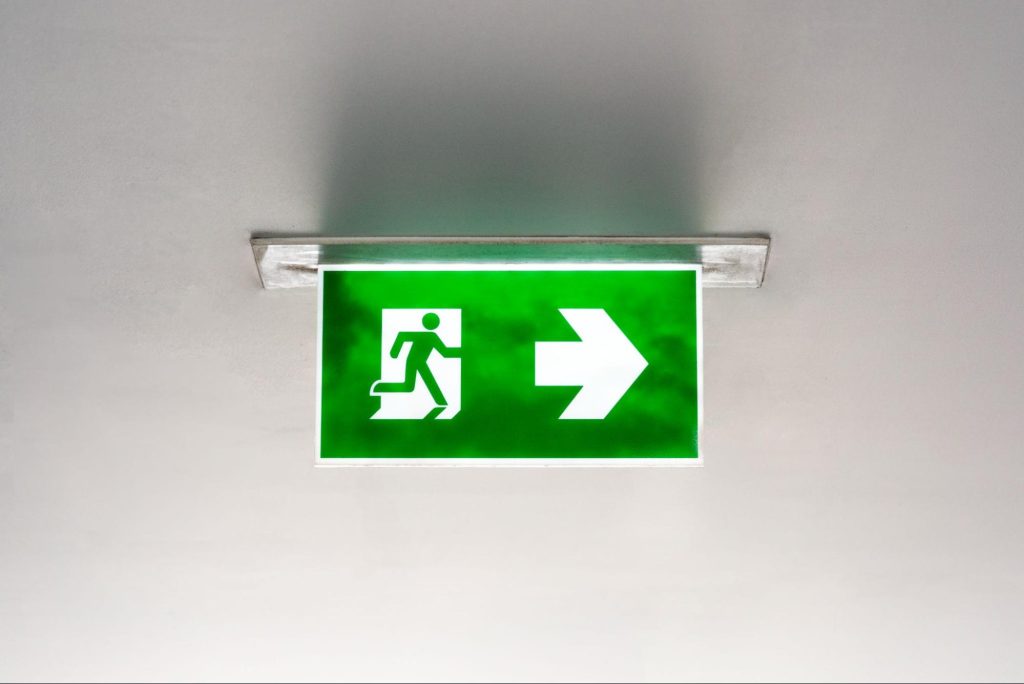
Emergency lighting helps residents and other building occupants find escape routes and evacuate safely if the normal lighting supply fails. Faults can leave corridors, stairwells and exits inadequately illuminated when they are needed most.
This article explains where emergency lighting may be required, who is responsible for it and how property managers can keep systems effective. It also covers the key emergency lighting regulations and British Standards that support these responsibilities.
What Is Emergency Lighting?
Emergency lighting is lighting that automatically operates when the normal electrical supply fails. Its purpose is to provide sufficient illumination for occupants to evacuate safely during a fire, power failure, or other emergency.
Unlike standard lighting, emergency lighting is connected to an independent power source, such as an integral battery or central battery system, allowing it to continue operating when mains electricity is lost.
Emergency lighting systems can include:
- Emergency escape lighting
- Open area (anti-panic) lighting
- High-risk task area lighting
- Local area lighting
- Illuminated exit signs
The type, location, and extent of emergency lighting required should always reflect the building’s fire risks, occupancy, and means of escape.
Why Is Emergency Lighting Required?
Emergency lighting helps occupants identify escape routes and evacuate safely when normal lighting is unavailable.
Without adequate emergency lighting, occupants may struggle to:
- Locate escape routes and final exits
- Safely navigate corridors and stairwells
- Avoid changes in floor level or other hazards
- Identify manual call points and firefighting equipment where provided
- Evacuate safely during a fire or power failure
Providing appropriate emergency lighting reduces the risks associated with evacuating a building in poor visibility and supports a wider programme of fire safety testing and inspections.
Which Buildings Require Emergency Lighting?
The need for emergency lighting depends on the building, its occupants, escape routes and the findings of the Fire Risk Assessment.
Emergency lighting is commonly provided within:
- Offices
- Factories
- Warehouses
- Retail premises
- Hotels
- Care homes
- Schools
- Hospitals
- Houses in Multiple Occupation (HMOs)
- Blocks of flats
- Supported housing
- Mixed-use developments
In residential buildings, emergency lighting is commonly installed along communal escape routes, where residents may need to evacuate in the event of a fire or power failure.
Property managers responsible for multiple buildings should assess each property individually rather than assume that the same emergency lighting provision is suitable for the entire portfolio.
Need Emergency Lighting Testing?
Osterna supports housing associations, managing agents, and large private landlords with professional emergency lighting testing and wider asset testing services across the UK.
Our planned testing programmes help organisations identify faults early, track system condition and maintain reliable emergency lighting across residential portfolios.
Where Should Emergency Lighting Be Installed?
The location of emergency lighting should reflect the building’s layout and the findings of the Fire Risk Assessment.
Common locations include:
- Escape routes
- Corridors
- Stairwells
- Final exits
- Changes in floor level
- Fire alarm call points
- Fire alarm control panels
- Firefighting equipment
- Accessible toilets where appropriate
- Plant rooms
- Areas immediately outside final exits leading to a place of safety
The objective is to provide residents and other occupants with sufficient visibility to follow escape routes and reach a place of safety if normal lighting fails. Property managers should also consider whether changes to layouts, escape routes or building use could affect the suitability of existing emergency lighting.
Who Is Responsible for Emergency Lighting?
Responsibility for emergency lighting typically rests with the Responsible Person under fire safety legislation. This may include:
- Employers
- Landlords
- Housing associations
- Managing agents
- Freeholders
- Residential management companies
- Local authorities
In practice, property and compliance teams need to ensure that appropriate emergency lighting is provided, faults are identified and addressed, and inspection and testing records are kept up to date.
A competent person may be appointed to inspect, test, or maintain emergency lighting systems, but the Responsible Person remains responsible for ensuring that appropriate fire safety measures remain in place.
Common Emergency Lighting Defects
Routine inspections frequently identify faults that may reduce the effectiveness of emergency lighting during an emergency.
Common examples include:
- Failed luminaires
- Battery failures
- Charging faults
- Damaged light fittings
- Obstructed emergency lighting
- Missing or damaged exit signs
- Poorly maintained central battery systems
- Incomplete inspection and testing records
Faults should be recorded and addressed promptly. A failed luminaire or battery can leave part of an escape route inadequately illuminated, while recurring defects across several properties may indicate a broader maintenance issue requiring attention.
A planned testing programme gives property managers regular visibility of system condition rather than waiting for a fault to become apparent during an emergency. Clear inspection records also make it easier to assign remedial work, monitor outstanding defects and identify recurring problems across multiple properties.
Which Emergency Lighting Regulations Apply?
Fire safety legislation requires Responsible Persons to provide and maintain appropriate fire safety measures, including emergency lighting where it is needed to support safe evacuation.
In England and Wales, the Regulatory Reform (Fire Safety) Order 2005 provides the principal legal framework for fire safety in relevant premises. Additional legislation applies to certain residential buildings, including the Fire Safety Act 2021 and Fire Safety (England) Regulations 2022.
In Scotland, relevant duties arise under the Fire (Scotland) Act 2005 and Fire Safety (Scotland) Regulations 2006.
The legislation establishes the legal responsibilities, while recognised standards such as BS 5266-1 provide practical recommendations for emergency lighting design, inspection, testing and maintenance.
Building Regulations may also influence emergency lighting provision when buildings are designed, constructed or altered, while fire safety legislation supports its ongoing management once premises are occupied.
The Role of the Health and Safety Executive (HSE)
For workplaces, emergency lighting may also be required under the Health and Safety at Work etc. Act 1974 and the Workplace (Health, Safety and Welfare) Regulations 1992, which are enforced by the Health and Safety Executive (HSE).
Regulation 8 of the Workplace Regulations requires suitable and sufficient emergency lighting where employees would be exposed to danger if the normal lighting supply failed.
These workplace duties sit alongside the Regulatory Reform (Fire Safety) Order 2005, which places separate fire safety responsibilities on the Responsible Person. Depending on the premises, organisations may therefore need to comply with both workplace health and safety legislation and fire safety legislation.
How Do British Standards Support Emergency Lighting?
BS 5266-1 provides recognised guidance on the emergency lighting of premises, supporting property managers and Responsible Persons with decisions around:
- Emergency lighting design
- System installation
- Inspection and commissioning
- Routine testing and maintenance
- Record keeping
- Periodic verification of system performance
BS EN 50172 and BS EN 1838 provide additional recommendations relating to emergency escape lighting systems and illumination requirements.
Following the relevant standards helps organisations manage emergency lighting consistently and demonstrate that systems are being appropriately maintained.
For guidance on inspection frequencies, read our article How Often Should Emergency Lighting Be Tested?
What Happens if Emergency Lighting Requirements Are Not Met?
Faulty or inadequate emergency lighting can leave residents and other occupants without sufficient illumination to follow escape routes safely during a fire or power failure.
Property managers may also face recurring remedial costs where faults are not identified and addressed through planned inspection and maintenance.
Where fire safety legislation applies, significant failures may result in enforcement action against the Responsible Person. This can include enforcement or prohibition notices and, in serious cases, prosecution.
Keeping Emergency Lighting Effective Across Your Buildings
Effective emergency lighting helps residents and other occupants find escape routes when normal lighting fails. Planned inspection and testing help property managers identify faults early, track remedial work and maintain reliable systems across individual buildings or wider portfolios.
Osterna works with housing associations, managing agents, local authorities, employers, and large private landlords across the UK, providing emergency lighting inspections and testing, alongside broader fire safety and building compliance services.
Get in touch with the Osterna team to discuss your emergency lighting requirements.
Frequently Asked Questions
No. The need for emergency lighting depends on the premises, its occupants, escape routes and the applicable fire safety requirements. A Fire Risk Assessment can help determine whether emergency lighting is needed and whether the existing provision remains appropriate.
Emergency lighting systems generally fall into two categories: maintained and non-maintained. Maintained emergency lighting remains illuminated during normal operation and continues operating if the mains power supply fails, while non-maintained emergency lighting only illuminates during a power failure.
By contrast, standby lighting is designed to allow normal activities to continue during a power outage rather than support emergency evacuation. The most appropriate system will depend on the building, its occupancy, and its fire safety requirements.
A Responsible Person is the individual or organisation responsible for managing fire safety within premises where fire safety legislation applies. This may be an employer, landlord, managing agent, housing association, freeholder or another person with control of the premises.
The Responsible Person may appoint a competent specialist to inspect, test, maintain or advise on emergency lighting systems, but retains responsibility for ensuring appropriate fire safety measures are in place.
Yes. A suitable and sufficient Fire Risk Assessment should determine whether emergency lighting is required, where it should be installed, and whether the existing system remains appropriate for the building, its occupants, and its means of escape.
Yes. Most emergency lighting systems are designed to operate automatically when the normal mains power supply fails, keeping escape routes illuminated during a power cut or other emergency.
Related articles
-
What Are the 5 Steps of a Fire Risk Assessment?
Not sure whether your building needs a fire risk assessment? This guide explains when fire risk assessments are legally required, who is responsible, and includes a practical checklist to help determine whether your premises fall within scope of fire safety legislation.
-
Do I Need a Fire Risk Assessment? Legal Requirements Explained
Not sure whether your building needs a fire risk assessment? This guide explains when fire risk assessments are legally required, who is responsible, and includes a practical checklist to help determine whether your premises fall within scope of fire safety legislation.
-
Are Fire Door Inspections a Legal Requirement?
Fire doors are one of the most commonly identified defects in residential fire safety inspections and can significantly undermine a building’s compartmentation strategy if left unchecked. This guide explains how often fire doors should be inspected, the legal requirements that apply, who is responsible for compliance, and how housing providers can develop an effective inspection programme across their portfolio.
-
Is a Fire Risk Assessment a Legal Requirement?
Fire risk assessments are a key part of residential fire safety compliance. Learn what UK legislation requires and what it means for managing agents and housing providers.
-
When Is a Fire Risk Assessment Required for Flats?
Fire risk assessments are a legal requirement for many residential buildings. This guide explains when they apply to flats, what legislation governs them, and what compliance professionals need to know.
-
Who Is Responsible for Fire Risk Assessments in a Block of Flats?
Managing fire safety within flats involves clear legal responsibilities. This guide explains who the Responsible Person is and what current fire safety legislation requires.
-
What Is a Fire Risk Assessment?
Fire risk assessments are a key part of fire safety compliance within residential buildings. This guide explains what a fire risk assessment includes, why it matters, and what current legislation requires.