Are Fire Door Inspections a Legal Requirement?
25 Jun 2026 | By Ron Fellowes MIFSM, GIFireE, CertNCRQ
Fire doors are one of the most commonly identified defects in residential fire safety inspections and can significantly undermine a building's compartmentation strategy if left unchecked. This guide explains how often fire doors should be inspected, the legal requirements that apply, who is responsible for compliance, and how housing providers can develop an effective inspection
Fire doors are one of the most important fire safety measures within a residential building. They help contain fire and smoke, protect escape routes, and support the compartmentation strategy that many blocks of flats rely on to keep residents safe.
In this article, we explain when fire door inspections are required, which buildings are affected, who is responsible, and what a compliant fire door inspection should include.
What Is a Fire Door Inspection?
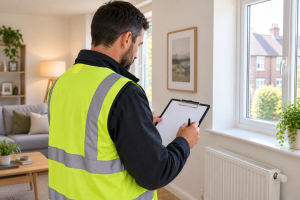
A fire door inspection is a systematic assessment of a fire door and its associated components to determine whether it will perform effectively in the event of a fire.
Fire doors form part of a building’s passive fire protection strategy. When correctly installed and maintained, they help:
- Restrict the spread of fire and smoke
- Protect escape routes
- Maintain compartmentation
- Support evacuation strategies
- Protect occupants and property
A fire door inspection assesses whether the door remains capable of delivering its intended level of fire resistance.
Are Fire Door Inspections a Legal Requirement?
Yes. Fire door inspections form part of the wider fire safety duties imposed on Responsible Persons within residential buildings.
The key legislation includes:
- The Regulatory Reform (Fire Safety) Order 2005 requires Responsible Persons to maintain fire precautions in an efficient state, efficient working order, and good repair.
- The Fire Safety Act 2021 clarified that flat entrance doors opening onto communal areas fall within the scope of fire safety legislation.
- The Fire Safety (England) Regulations 2022 introduced specific inspection requirements for certain residential buildings, including routine inspections of communal fire doors and flat entrance doors. The regulations came into force on 23 January 2023 and introduced additional duties for Responsible Persons in multi-occupied residential buildings.
In Scotland, fire safety duties are governed by the Fire (Scotland) Act 2005 and the Fire Safety (Scotland) Regulations 2006. While the legislation does not prescribe the same inspection frequencies as England, duty holders must still maintain fire safety measures, including fire doors, as part of their broader fire safety responsibilities.
Which Buildings Require Fire Door Inspections?
In practice, most residential buildings that rely on fire doors as part of their fire safety strategy should have a fire door inspection programme in place.
Fire door inspections are particularly relevant for:
- Blocks of flats
- Apartment buildings
- Houses in Multiple Occupation (HMOs)
- Supported housing schemes
- Sheltered housing developments
- Student accommodation
- Mixed-use residential buildings
- Higher-risk residential buildings (HRRBs)
Within these buildings, fire doors play a critical role in protecting escape routes, maintaining compartmentation, and limiting the spread of fire and smoke.
When Are Fire Door Inspections Legally Required?
The legal requirements vary depending on the height and type of building.
Residential Buildings Under 11 Metres
For residential buildings under 11 metres, the legislation does not prescribe specific inspection frequencies. However, Responsible Persons still have legal duties under the Regulatory Reform (Fire Safety) Order 2005 to maintain fire safety measures and ensure fire doors remain effective.
In practice, many organisations implement planned inspection programmes across all residential buildings to provide assurance that fire doors continue to perform as intended.
Residential Buildings Over 11 Metres
The Fire Safety (England) Regulations 2022 introduced specific duties for Responsible Persons in multi-occupied residential buildings over 11 metres in height (typically four storeys or more).
These duties include:
- Quarterly inspections of communal fire doors
- Annual inspections of flat entrance doors that open onto communal areas
Responsible Persons must also make reasonable efforts to gain access to flat entrance doors when carrying out annual inspections.
Additional Considerations for Higher-Risk Residential Buildings
Higher-risk residential buildings (HRRBs), typically those at least 18 metres or 7 storeys in height, are subject to enhanced regulatory oversight under the Building Safety Act 2022.
For these buildings, organisations should maintain accurate fire door asset information, inspection records, and evidence that identified defects are remediated within appropriate timescales.
Fire door inspection records often form part of wider building safety management arrangements and help demonstrate that key fire safety measures remain effective and properly maintained.
The table below summarises when fire door inspections are legally required and how inspection expectations vary across different types of residential building.
| Building Type | Legal Requirement | Typical Inspection Expectations |
| Residential buildings under 11 metres | No prescribed inspection frequency under legislation. | Risk-based inspection programme informed by the fire risk assessment and building risks. |
| Multi-occupied residential buildings over 11 metres | Quarterly inspections of communal fire doors and annual inspections of flat entrance doors opening onto communal areas. | Statutory requirement under the Fire Safety (England) Regulations 2022. |
| Higher-risk residential buildings (18m+ or 7+ storeys) | Subject to the same inspection requirements as buildings over 11 metres. | Enhanced oversight, detailed asset records, defect tracking, and evidence of completed remedial works often form part of wider building safety management arrangements. |
Need a Fire Door Inspection?
Osterna supports housing associations, managing agents, and large private landlords with professional fire door inspection services across the UK. Our inspections help organisations identify defects, prioritise remedial works, and demonstrate compliance with current fire safety legislation.
What Does a Fire Door Inspection Include?
A professional fire door inspection assesses whether a fire door assembly will perform as intended in the event of a fire. The inspection examines the condition, installation, and operation of the door and its associated components against recognised fire safety standards.
A typical inspection includes:
Certification and Identification
Correct identification helps confirm that the fire door is suitable for its intended application. Where available, certification labels, plugs, or markings are reviewed to verify the door’s fire resistance rating, such as FD30 or FD60.
Door Leaf and Frame
Damage to the door leaf or frame can significantly reduce a fire door’s ability to resist the spread of fire and smoke. The inspection considers issues such as warping, holes, cracks, impact damage, and unauthorised alterations that could affect performance.
Gaps and Clearances
Even small variations in door gaps can affect how effectively a fire door performs. Clearances around the door are assessed to ensure they remain within acceptable tolerances and do not compromise the fire-resisting performance of the door assembly.
Intumescent Strips and Smoke Seals
Intumescent strips and smoke seals play a critical role in restricting the spread of fire and smoke. The inspection confirms they are present, correctly fitted, continuous, and free from damage, excessive wear, or paint contamination.
Glazing and Vision Panels
Any glazing within a fire door must be capable of maintaining the door’s fire-resisting performance. Fire-rated glass, glazing systems, and associated seals are therefore reviewed to ensure they remain secure, correctly installed, and suitable for the door’s fire resistance rating.
Self-Closing Devices
A fire door cannot perform its intended function if it does not close correctly. Self-closing devices are tested to ensure the door fully closes and latches from any open position without sticking or obstruction.
Hinges and Ironmongery
The performance of a fire door depends on more than the door itself. Hinges, locks, latches, handles, and other ironmongery are reviewed to ensure they remain secure, appropriately specified, and in good working order.
Signage
Appropriate signage helps occupants understand how a fire door should be used and supports the building’s wider fire safety strategy. Where required, signage should remain present, visible, and legible.
Inspection Findings and Remedial Actions
The inspection concludes with a record of any defects, areas of non-compliance, and recommended remedial works. This provides the Responsible Person with a clear audit trail, supports compliance management, and helps prioritise repairs that could affect the fire door’s ability to perform as intended.
Learn more about What a Fire Door Inspection Includes.
Who Is Responsible for Fire Door Inspections?
The Responsible Person is legally responsible for ensuring fire doors are properly inspected, maintained, and kept in a condition that allows them to perform effectively during a fire.
Depending on the building, this may involve:
- Housing associations
- Managing agents
- Freeholders
- Resident management companies
- Building owners
- Employers
While organisations often appoint specialist fire door assessors to carry out inspections, legal responsibility for compliance cannot be delegated. The Responsible Person must ensure appropriate fire door inspections are completed, defects are identified and recorded, and remedial works are carried out within appropriate timescales.
What Records Should Be Kept?
Fire door inspections should generate a clear audit trail that demonstrates both compliance and effective management of identified defects.
What Records Should Be Kept?
Maintaining accurate inspection records is an important part of demonstrating compliance with fire safety legislation. If a Responsible Person is required to carry out fire door inspections, they should also be able to demonstrate when inspections took place, what defects were identified, and how those defects were addressed.
Fire door inspections should therefore generate a clear audit trail that demonstrates both compliance and effective management of identified defects.
Responsible Persons should maintain records of:
- Inspection dates
- Door locations and asset references
- Defects identified
- Risk ratings
- Recommended remedial actions
- Target completion dates
- Evidence of completed repairs
- Follow-up inspections where required
For housing associations, managing agents, and other Responsible Persons, accurate records help demonstrate that fire door inspection duties are being fulfilled and that identified defects are being managed appropriately.
In higher-risk residential buildings, inspection records may also contribute to the wider building safety information maintained as part of the Golden Thread under the Building Safety Act 2022.
What Happens if Fire Doors Are Not Inspected?
Fire doors are designed to protect escape routes, support compartmentation, and prevent the spread of fire and smoke. If they are not inspected and maintained, defects can remain hidden for years, compromising the building’s fire safety strategy when it is needed most.
For housing associations, managing agents, and landlords, failing to inspect fire doors can result in:
- Increased fire and smoke spread throughout the building
- Compartmentation failures that undermine the building’s fire strategy
- Reduced protection for escape routes and communal areas
- Increased risk to residents, visitors, contractors, and staff
- Delays to remediation programmes and rising repair costs
- Enforcement notices issued by Fire and Rescue Services
- Prohibition notices restricting building use in serious cases
- Criminal prosecution and financial penalties
- Difficulties demonstrating compliance during audits, inspections, and investigations
- Increased liability exposure following a fire incident
Regular inspections provide more than compliance assurance. They help identify defects before they become critical safety issues, support effective fire safety management, and provide evidence that essential passive fire protection measures remain fit for purpose.
Maintaining Effective Fire Door Inspection Programmes
Fire door inspections form part of specific legal duties that Responsible Persons must comply with. Regular inspections help identify defects before they become significant safety risks, support compartmentation strategies, and provide evidence that fire safety measures remain effective.
If you are responsible for fire safety compliance across a residential portfolio and need an experienced provider, Osterna can help.
We work with housing associations, managing agents, and large private landlords across the UK, delivering fire door inspections, Fire Risk Assessments, asset testing, and building compliance services.
Get in touch with the Osterna team today.
Frequently Asked Questions
In England and Wales, fire doors are primarily governed by the Regulatory Reform (Fire Safety) Order 2005, the Fire Safety Act 2021, the Fire Safety (England) Regulations 2022, and, for certain buildings, the Building Safety Act 2022. Building Regulations also play an important role by setting standards for the design, specification, and installation of fire doors within new and refurbished buildings. Together, these requirements place duties on Responsible Persons to maintain fire safety measures within their premises.
The Fire Safety (England) Regulations 2022, which came into force on 23 January 2023, introduced specific fire door inspection requirements for certain multi-occupied residential buildings. For buildings over 11 metres in height, Responsible Persons must inspect communal fire doors every 3 months and undertake annual checks of flat entrance doors opening onto communal areas.
The regulations also introduced additional duties relating to resident information and fire safety management, while clarifying requirements that apply to the common parts of residential buildings rather than individual domestic premises.
A fire door inspection assesses whether a fire door assembly will perform effectively in the event of a fire. Inspectors typically examine the door leaf, frame, gaps and clearances, including the gaps between the door and the frame, intumescent strips, smoke seals, glazing, self-closing devices, hinges, ironmongery, and signage.
The inspection should identify defects, signs of wear and tear, assess compliance, and provide recommendations for any remedial works required to maintain the door’s fire-resisting performance. Without regular inspections, defects that affect how fire doors perform may go unnoticed, meaning doors may no longer provide the level of protection expected.
Routine visual inspections can be carried out by building managers, landlords, or maintenance teams. However, a formal fire door inspection should be completed by a competent person with the necessary knowledge, training, and experience to identify defects and assess whether the door remains compliant and fit for purpose.
In multi-occupied residential buildings over 11 metres in height, the Fire Safety (England) Regulations 2022 require fire doors in communal areas to be inspected at least every 3 months. Flat entrance doors opening onto communal areas should be checked annually, with Responsible Persons making reasonable efforts to gain access.
For other buildings, fire door checks must be maintained at appropriate intervals based on the building’s risks, occupancy, and fire safety arrangements.
Related articles
-
How Often Do Landlords Need to Renew Their EPC?
Expired EPCs can delay lettings and create avoidable compliance issues, particularly across larger residential portfolios. This article explains when landlords need a new EPC, when early renewal may be worthwhile, and how planned assessments can keep certificates up to date.
-
Who’s Responsible for the EPC – Landlord or Tenant?
Responsibility for obtaining and providing an Energy Performance Certificate (EPC) generally rests with the landlord. This article explains who pays for an EPC, who renews it, tenants’ responsibilities, and how landlords can maintain compliance with current EPC legislation.
-
Where Should Smoke Alarms Be Positioned?
Correct positioning of smoke alarms is essential for reliable fire detection and occupant protection. This guide explains where alarms should be installed, where they should be avoided, the legislation and Building Regulations that influence alarm positioning, and common installation mistakes.
-
Are Fire Risk Assessment Recommendations Mandatory?
Fire Risk Assessment recommendations are not automatically legal requirements, but they should never be dismissed as optional. Responsible Persons should prioritise and manage them and maintain compliance with UK fire safety legislation.
-
Fire Risk Assessment for Block Management
Fire Risk Assessments are a key part of managing fire safety in residential blocks. This guide explains who is responsible, what an assessment should cover and how managing agents and landlords should manage findings across their portfolios.
-
Fire Risk Assessment for High-Rise Buildings
Fire risk assessments for high-rise residential buildings must consider evacuation arrangements, external walls, communal areas and building-specific fire hazards. Assessments should cover and how property and compliance teams can manage findings across complex residential buildings.
-
Fire Risk Assessment for Student Accommodation
Student accommodation presents specific fire safety challenges, from shared kitchens and changing occupancy to evacuation and sleeping risk. A Fire Risk Assessment should cover how universities, landlords and accommodation providers should manage the findings.
-
How to Choose a Fire Risk Assessor
Choosing the right fire risk assessor is essential for effective fire safety management and ongoing compliance. This guide explains what makes a competent fire risk assessor, why experience and third-party certification matter, what questions to ask before appointing a provider, and how to identify a high-quality Fire Risk Assessment.
-
Smoke Vent Testing: A Compliance Guide for Responsible Persons
Smoke vent testing helps verify that Automatic Opening Vents (AOVs) and smoke control systems remain operational throughout the life of a building. This guide explains the legal requirements, British Standards, recommended testing frequencies, Responsible Person duties, and how planned inspection and maintenance support ongoing fire safety compliance.
-
Smoke Alarm Requirements for HMO Landlords
HMO smoke alarm requirements are more complex than those for standard rental properties. This guide explains how HMO fire alarm requirements differ, what landlords need to provide, and how to maintain fire safety compliance.