Are Fire Risk Assessment Recommendations Mandatory?
23 Oct 2026 | By Ron Fellowes MIFSM, GIFireE, CertNCRQ
Fire Risk Assessment recommendations are not automatically legal requirements, but they should never be dismissed as optional. Responsible Persons should prioritise and manage them and maintain compliance with UK fire safety legislation.

A Fire Risk Assessment (FRA) can identify anything from minor improvements to serious deficiencies that require urgent attention. Landlords, property owners and organisations then need to decide which recommendations require action and how quickly they need to respond.
This article explains whether Fire Risk Assessment recommendations are mandatory, when they require action, the duties of the Responsible Person, and what to do when a recommendation appears unnecessary, impractical, or disproportionate.
Are Fire Risk Assessment Recommendations Legally Binding?
A fire risk assessor does not normally have the power to create a legal requirement simply by adding a recommendation to a Fire Risk Assessment.
The legal duties sit with the Responsible Person under the Regulatory Reform (Fire Safety) Order 2005, which requires a suitable and sufficient Fire Risk Assessment together with appropriate general fire precautions to protect relevant persons.
The key question is whether action is necessary to meet the Responsible Person’s duties under the Fire Safety Order. Landlords, property owners, and managing agents need to understand the risks involved and whether action is necessary to meet their fire safety duties.
A recommendation should not be ignored solely because the assessor cannot directly enforce it.
When Does a Fire Risk Assessment Recommendation Require Action?
A recommendation requires action when it identifies a fire safety risk that must be addressed to meet the Responsible Person‘s duties under the Fire Safety Order.
This can include:
- Defective or inadequate fire doors
- Obstructed or unsuitable escape routes
- Defects affecting compartmentation
- Inadequate fire detection or warning arrangements
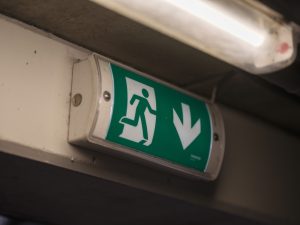
- Inadequate emergency lighting
- Fire safety equipment that has not been properly maintained
- Inadequate emergency procedures
- Insufficient arrangements for people who may be particularly at risk
The response should reflect the seriousness of the risk. Significant deficiencies will require urgent action, while lower-risk issues can be addressed through planned maintenance or management measures.
If the assessor cannot determine the extent of an issue during the FRA, they will recommend further investigation before the appropriate remedial action can be established.
Need Help Managing Fire Risk Assessment Recommendations?
Osterna supports housing associations, managing agents, local authorities, freeholders, and large private landlords with Fire Risk Assessments, fire door inspections, and wider building compliance services across the UK.
Whether you need a new Fire Risk Assessment or support implementing its recommendations, our team can help.
How Should Fire Risk Assessment Actions Be Managed?
Responsible Persons should review each recommendation, understand the risk it addresses and take appropriate action to meet their fire safety duties.
Higher-risk issues need prompt attention. If permanent remedial work cannot be completed immediately, interim precautions will be necessary until the risk has been properly addressed.
Recommendations should remain open until the identified risk has been resolved, whether through the recommended work or another suitable measure that provides an equivalent level of fire safety.
Read our guide to What Happens After a Fire Risk Assessment? for more detail on prioritising, tracking and closing FRA actions.
Can You Take a Different Approach to a Fire Risk Assessment Recommendation?
Fire Risk Assessment recommendations are based on the assessor’s professional judgement and the information available at the time of the assessment.
In some cases, a recommendation may appear unnecessary, impractical, or disproportionate because additional information has become available, the circumstances have changed, or another solution can achieve the same fire safety outcome.
Before deciding to adopt a different solution, Responsible Persons should:
- Discuss the recommendation with the fire risk assessor to understand the risk it is intended to address.
- Consider whether additional information or changed circumstances affect the recommendation.
- Where appropriate, identify an alternative measure that provides an equivalent level of fire safety.
- Seek advice from another competent fire safety professional where the issue is significant or technically complex.
- Record the reasons for adopting an alternative approach together with supporting evidence demonstrating how the same level of fire safety has been achieved.
Where a fire and rescue authority has issued a formal enforcement notice, different legal requirements apply. These notices should not be treated in the same way as recommendations contained within a Fire Risk Assessment.
If you need independent advice, our guide, How to Choose a Fire Risk Assessor, explains what to look for when appointing a competent assessor.
What Happens if the Same FRA Recommendations Keep Appearing?
Repeated recommendations may indicate a wider management issue rather than an isolated defect.
For example, recurring fire door defects could point to weaknesses in inspection or maintenance programmes, while repeated compartmentation failures following refurbishment will indicate shortcomings in contractor management or quality assurance.
Rather than repeatedly closing individual actions, Responsible Persons should investigate the underlying cause and take steps to prevent the issue recurring across the building or wider property portfolio.
Managing Fire Risk Assessment Recommendations
Fire Risk Assessment recommendations should form part of an organisation’s wider fire safety management rather than being viewed as a simple compliance checklist. Responsible Persons should understand the risk behind each recommendation, prioritise actions according to their significance, and maintain clear records demonstrating how identified fire safety risks have been addressed.
Where an alternative approach is adopted, it should achieve an equivalent level of fire safety and be supported by appropriate technical justification and evidence.
If you are responsible for fire safety compliance across a residential portfolio and need a trusted, BAFE SP205-accredited provider, Osterna can help. We support housing associations, managing agents, local authorities, freeholders, and large private landlords with professional Fire Risk Assessments and wider fire safety compliance services across the UK.
Speak to the Osterna team about your Fire Risk Assessment requirements.
Frequently Asked Questions
Fire Risk Assessment recommendations are intended to address identified fire hazards and reduce the level of risk within a building. Implementing appropriate actions helps Responsible Persons ensure compliance with their duties under the Regulatory Reform (Fire Safety) Order 2005 and maintain effective fire safety across the premises.
Some Fire Risk Assessment actions require specialist investigations, procurement, or major building works and cannot always be completed immediately. Responsible Persons should prioritise higher-risk findings and consider whether interim measures are necessary. Progress should be monitored and documented as part of the building’s ongoing fire safety management.
Fire Risk Assessment recommendations are based on the assessor’s professional judgement and the information available at the time of the assessment. If a recommendation appears unnecessary, impractical, or disproportionate, discuss it with the assessor to understand the risk it is intended to address.
An alternative solution will be appropriate where it achieves an equivalent level of fire safety. Significant or technically complex issues should be reviewed by another competent fire safety professional, and any alternative approach should be supported by appropriate evidence.
Not directly. Fire and rescue authorities enforce the requirements of the Fire Safety Order rather than an assessor’s recommendations themselves.
However, ignoring a significant finding could leave a fire safety risk unresolved and provide evidence that the Responsible Person has failed to meet their legal duties. The enforcing authority will then issue an enforcement notice or take other action where appropriate.
Additional requirements may also apply to higher-risk buildings under the Building Safety Act 2022.
Related articles
-
What Is a Person-Centred Fire Risk Assessment?
Some residents require additional fire safety measures beyond those identified in a standard Fire Risk Assessment. This guide explains what a Person-Centred Fire Risk Assessment is, when it may be appropriate, and how it helps organisations manage individual fire risks while supporting compliance.
-
How Often Should Fire Alarms Be Tested?
Routine fire alarm testing is an important part of fire safety compliance. This guide explains testing frequencies, legal responsibilities, record-keeping, and the role of BS 5839 in maintaining compliant fire alarm systems.
-
What Does a Fire Door Inspection Include?
A fire door can appear compliant, while hidden defects reduce its ability to resist fire and smoke. Discover what a fire door inspection includes, what inspectors check, and how inspection findings help Responsible Persons prioritise remedial works and demonstrate compliance.
-
What Is a Fire Door Inspection?
Fire doors can deteriorate over time without obvious signs of damage, creating compliance and safety risks. Learn what a fire door inspection is, when it should be arranged, and how it helps Responsible Persons manage fire safety across residential buildings.
-
Person-Centred Fire Risk Assessment (PCFRA) vs Standard Fire Risk Assessment: What’s the Difference?
A standard Fire Risk Assessment and a Person-Centred Fire Risk Assessment serve different purposes, but many organisations need both. This guide explains the key differences, when each assessment is appropriate, and how they work together to support effective fire safety management and compliance.
-
When Does a Fire Risk Assessment Recommend a Variation Order?
Costly fire alarm upgrades are not always the most appropriate outcome of a Fire Risk Assessment. Learn when a Fire Alarm Variation Order may provide a proportionate, risk-based solution and how it supports residential fire alarm compliance.
-
How Long Does a Fire Risk Assessment Last?
Many organisations assume a fire risk assessment remains valid until the next scheduled review. In reality, building changes, evolving risks, and regulatory expectations can all affect whether an assessment remains suitable and sufficient. This guide explains when a fire risk assessment should be reviewed and the warning signs that it may no longer reflect the building’s current risks.
-
What Should a Fire Risk Assessment Include?
A fire risk assessment that overlooks key risks can leave organisations exposed to significant compliance and safety issues. This guide explains what a suitable and sufficient fire risk assessment should contain and how to identify whether an assessment provides the information needed to manage fire safety effectively.
-
How Often Should a Fire Risk Assessment Be Carried Out?
Many organisations review fire risk assessments on a fixed schedule. The challenge is that review frequency should reflect the building’s risks, not simply the calendar. This guide explains how Responsible Persons can develop review programmes that support effective fire safety management and compliance.
-
How Often Should Fire Doors Be Inspected?
Meeting the minimum legal requirements is not always enough to demonstrate effective fire door management. This guide explains how often fire doors should be inspected, when additional checks may be appropriate, and how housing providers can take a risk-based approach to compliance.