How Often Should a Fire Risk Assessment Be Carried Out?
29 Jun 2026 | By Ron Fellowes MIFSM, GIFireE, CertNCRQ
Many organisations review fire risk assessments on a fixed schedule. The challenge is that review frequency should reflect the building's risks, not simply the calendar. This guide explains how Responsible Persons can develop review programmes that support effective fire safety management and compliance.

While most Responsible Persons understand that fire risk assessments must be reviewed, there is often uncertainty around how frequently reviews should take place and whether there is a recommended schedule for different types of residential building.
In this article, we explain what the law requires, what industry guidance recommends, and how organisations can develop an effective fire risk assessment review programme across residential portfolios.
Is There a Legal Requirement to Review a Fire Risk Assessment?
Yes. In England and Wales, the Regulatory Reform (Fire Safety) Order 2005 requires the Responsible Person to ensure that the fire risk assessment remains relevant and is reviewed where necessary. However, the legislation does not prescribe a fixed review frequency.
Similarly, in Scotland, the Fire (Scotland) Act 2005 and the Fire Safety (Scotland) Regulations 2006 require duty holders to assess fire risks and maintain appropriate fire safety arrangements, but do not specify how often assessments must be carried out.
This means there is no universal rule requiring annual, biennial, or five-yearly reviews. Instead, review programmes should reflect the risks present within the building and the extent to which those risks may change over time.
What Does Industry Guidance Recommend?
Although legislation does not prescribe review intervals, industry guidance provides a framework for determining how frequently fire risk assessments should be reviewed.
BS 9792:2025 recommends that review frequencies should reflect the building’s height, complexity, occupancy profile, and fire safety risks.
The table below provides an overview of typical review frequencies.
| Building Type | Typical Review Frequency | Typical Reassessment Frequency |
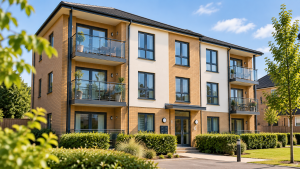
| Low-risk residential buildings (up to 4 storeys or below 11m) | Every 2 years | Every 4 years |
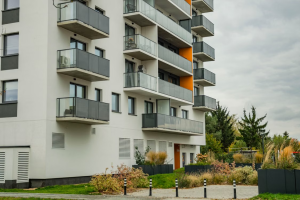
| Medium-risk residential buildings (approximately 11–18m) | Annually | Every 3 years |
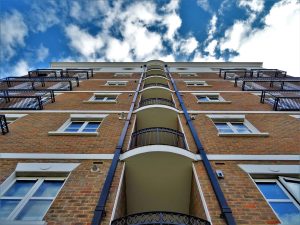
| Higher-risk residential buildings (18m+ or 7+ storeys) | Annual review may not provide sufficient assurance | Full reassessment may be appropriate annually |
These timeframes should be treated as guidance rather than fixed rules. The Responsible Person should always consider the specific risks within the building when determining review frequencies.
Need a Fire Risk Assessment?
Osterna delivers professionally accredited Fire Risk Assessments for housing associations, managing agents, and large private landlords across the UK.
Taking a Risk-Based Approach
Review frequencies should not be determined solely by building height. A range of factors can influence how frequently a fire risk assessment should be reviewed, including:
- Building complexity
- Occupancy profile
- Resident vulnerability
- Fire safety management arrangements
- Previous fire risk assessment findings
- Known defects or remediation programmes
- The building’s fire strategy
- The outcome of previous reviews
For many housing associations and managing agents, a risk-based approach provides a more effective method of prioritising resources and maintaining oversight across large residential portfolios.
When Should a Fire Risk Assessment Be Reviewed Earlier?
Routine review programmes are important, but certain events may justify an earlier review regardless of the planned schedule.
Examples include:
- Major refurbishment works
- Structural alterations
- Changes to building use
- Changes to occupancy
- The introduction of vulnerable residents
- Installation of new fire safety systems
- Changes to evacuation procedures
- Following a fire incident or near miss
- Following enforcement action or significant audit findings
Where significant changes occur, the Responsible Person should consider whether the existing assessment continues to reflect the building’s current risks and fire safety arrangements.
What Happens if a Fire Risk Assessment Is Out of Date?
An out-of-date fire risk assessment can leave organisations making decisions based on risks that no longer reflect the building’s current condition.
As buildings change, occupancy profiles evolve, and fire safety arrangements are updated, previously identified controls may no longer be effective and new risks may emerge. If the assessment is not reviewed, these issues can go unnoticed.
For housing associations, managing agents, and landlords, this can result in:
- Fire safety defects remaining unresolved
- Compartmentation and fire-stopping failures being overlooked
- Delays to remediation programmes
- Increased compliance and liability risks
- Enforcement notices and prosecution
- Difficulties demonstrating compliance during audits and inspections
- Increased costs associated with delayed corrective action
Regular risk assessments help ensure fire safety risks remain visible, remedial actions remain on track, and the fire risk assessment continues to support effective decision-making across your portfolio.
Supporting Ongoing Fire Safety Compliance Across Your Portfolio
Fire risk assessments do not have a fixed expiry date, but they must remain suitable, sufficient, and reflective of the building’s current risks. Taking a risk-based approach to reassessments helps ensure fire safety arrangements remain effective as buildings, occupants, and regulatory expectations evolve.
If you are responsible for fire safety compliance across a residential portfolio and need a trusted, BAFE SP205-accredited provider, Osterna can help.
We work with housing associations, managing agents, and large private landlords across the UK, delivering Fire Risk Assessments, asset testing, fire door inspections, and building compliance services.
Get in touch with the Osterna team today.
Frequently Asked Questions
A suitable and sufficient fire risk assessment identifies fire hazards, evaluates the risks to occupants, and assesses whether existing fire safety measures adequately protect people within the building.
It should review fire alarms, fire extinguishers, emergency lighting, escape routes, fire doors, compartmentation, and the building’s fire safety plan, while providing clear recommendations to reduce risk and maintain compliance. For blocks of flats, the assessment should also reflect the building’s fire strategy, occupancy profile, and any relevant fire safety management arrangements.
The Responsible Person should review the assessment regularly and update it whenever significant changes affect the building, occupancy, or fire safety arrangements.
The assessment must be reviewed following events such as major refurbishment works, extensions, changes to occupancy, new fire safety systems, or a fire incident. It should also be reviewed where there is reason to suspect that it is no longer valid or no longer reflects the risks present within the building.
A competent fire risk assessor should carry out the assessment. A competent person has the necessary skills, knowledge, experience, and personal qualities to complete a suitable and sufficient fire risk assessment safely and effectively.
BS 8674:2025 code of practice establishes a formal competency framework for fire risk assessors and introduces Foundation, Intermediate, and Advanced competency levels based on building complexity and risk.
No. In England and Wales, the Regulatory Reform (Fire Safety) Order 2005 requires the Responsible Person to ensure the fire risk assessment remains suitable and sufficient, but it does not prescribe a fixed review interval.
However, many organisations adopt annual reviews or commission a new fire risk assessment for higher-risk residential buildings to help ensure fire safety arrangements remain effective and compliant.
A fire risk assessment should be updated whenever significant changes affect the building or its fire safety arrangements. This may include refurbishment works, structural alterations, changes to occupancy, changes to evacuation procedures, the installation of new fire safety systems, or following a fire incident.
An updated fire risk assessment must accurately reflect the building’s current condition, occupancy profile, fire strategy, and fire safety risks.
Related articles
-
How Often Do Landlords Need to Renew Their EPC?
Expired EPCs can delay lettings and create avoidable compliance issues, particularly across larger residential portfolios. This article explains when landlords need a new EPC, when early renewal may be worthwhile, and how planned assessments can keep certificates up to date.
-
Who’s Responsible for the EPC – Landlord or Tenant?
Responsibility for obtaining and providing an Energy Performance Certificate (EPC) generally rests with the landlord. This article explains who pays for an EPC, who renews it, tenants’ responsibilities, and how landlords can maintain compliance with current EPC legislation.
-
Where Should Smoke Alarms Be Positioned?
Correct positioning of smoke alarms is essential for reliable fire detection and occupant protection. This guide explains where alarms should be installed, where they should be avoided, the legislation and Building Regulations that influence alarm positioning, and common installation mistakes.
-
Are Fire Risk Assessment Recommendations Mandatory?
Fire Risk Assessment recommendations are not automatically legal requirements, but they should never be dismissed as optional. Responsible Persons should prioritise and manage them and maintain compliance with UK fire safety legislation.
-
Fire Risk Assessment for Block Management
Fire Risk Assessments are a key part of managing fire safety in residential blocks. This guide explains who is responsible, what an assessment should cover and how managing agents and landlords should manage findings across their portfolios.
-
Fire Risk Assessment for High-Rise Buildings
Fire risk assessments for high-rise residential buildings must consider evacuation arrangements, external walls, communal areas and building-specific fire hazards. Assessments should cover and how property and compliance teams can manage findings across complex residential buildings.
-
Fire Risk Assessment for Student Accommodation
Student accommodation presents specific fire safety challenges, from shared kitchens and changing occupancy to evacuation and sleeping risk. A Fire Risk Assessment should cover how universities, landlords and accommodation providers should manage the findings.
-
How to Choose a Fire Risk Assessor
Choosing the right fire risk assessor is essential for effective fire safety management and ongoing compliance. This guide explains what makes a competent fire risk assessor, why experience and third-party certification matter, what questions to ask before appointing a provider, and how to identify a high-quality Fire Risk Assessment.
-
Smoke Vent Testing: A Compliance Guide for Responsible Persons
Smoke vent testing helps verify that Automatic Opening Vents (AOVs) and smoke control systems remain operational throughout the life of a building. This guide explains the legal requirements, British Standards, recommended testing frequencies, Responsible Person duties, and how planned inspection and maintenance support ongoing fire safety compliance.
-
Smoke Alarm Requirements for HMO Landlords
HMO smoke alarm requirements are more complex than those for standard rental properties. This guide explains how HMO fire alarm requirements differ, what landlords need to provide, and how to maintain fire safety compliance.