When Is a Fire Risk Assessment Required for Flats?
11 Jun 2026 | By Ron Fellowes MIFSM, GIFireE, CertNCRQ
Fire risk assessments are a legal requirement for many residential buildings. This guide explains when they apply to flats, what legislation governs them, and what compliance professionals need to know.

Fire risk assessments are a core part of fire safety compliance for blocks of flats. This guide sets out when an FRA is required, how often it should be reviewed, which assessment types apply, what areas are in scope, and who is responsible.
When Is a Fire Risk Assessment Required for Flats?
Fire risk assessments are required for the common parts of multi‑occupied residential buildings, but the exact legal basis varies by UK nation. Here’s how it applies in England and Wales and Scotland.
England and Wales
- The Regulatory Reform (Fire Safety) Order 2005 requires a suitable and sufficient fire risk assessment for the common parts of multi‑occupied residential buildings, including blocks of flats.
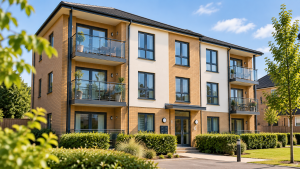
- Typical buildings in scope include purpose‑built blocks of flats, HMOs, sheltered and supported housing, student accommodation, and mixed‑use residential buildings.
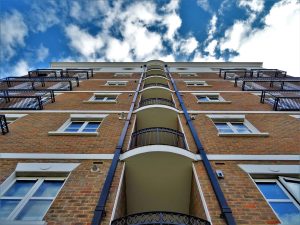
- The Fire Safety Act 2021 clarified that the Fire Safety Order also applies to external walls, cladding systems, balconies, and flat entrance doors opening onto common parts. The Fire Safety (England) Regulations 2022 introduced further duties for higher‑risk residential buildings.
Scotland
- Duties under the Fire (Scotland) Act 2005 and the Fire Safety (Scotland) Regulations 2006 require those responsible for relevant premises to assess fire risks and implement appropriate fire safety measures and precautions. For blocks of flats, this covers the common parts.
If you manage portfolios across multiple jurisdictions, align each property to its correct legislative framework.
How Often Should a Fire Risk Assessment Be Carried Out in Flats?
Although fire risk assessments do not technically expire under legislation, industry guidance and Local Government Association guidance recommend different review periods depending on the height and risk profile of the building.
Recommended Review Frequency for Flats
Industry guidance supports a risk-based approach to reviewing fire risk assessments, taking account of the building’s height, complexity, occupancy profile, and fire safety risks.
- Low-rise buildings (up to 4 storeys or below 11m): Many organisations review the fire risk assessment every 2 years and arrange a new assessment every 4 years.
- Mid-rise buildings (5–6 storeys or approximately 11–18m): Many housing providers organise annual reviews and complete a new fire risk assessment every 3 years.
- High-rise buildings (7+ storeys or 18m+): Many organisations arrange annual reassessments, particularly where enhanced regulatory duties, complex fire safety systems, or significant remediation programmes are in place.
Regardless of building height, the Responsible Person should review the fire risk assessment immediately following significant changes, major refurbishment works, or a fire incident.
When Should a Fire Risk Assessment Be Updated Immediately?
The Responsible Person should review or repeat the fire risk assessment immediately where significant changes affect the building or fire safety arrangements.
This may include:
- Major refurbishment or remediation works
- Structural alterations
- Changes to the building layout
- Installation or replacement of fire safety systems
- Changes to occupancy or resident profile
- Following a fire or near-miss incident
Need a Fire Risk Assessment?
Osterna delivers professionally accredited Fire Risk Assessments for housing associations, managing agents, and large private landlords across the UK. We are operationally ready to take on new clients.
What Types of Fire Risk Assessments Apply to Flats?
Different types of fire risk assessments apply depending on the height, layout, construction type, and fire risk profile of the building.
Type 1 Fire Risk Assessment
A Type 1 fire risk assessment is the standard assessment used for most purpose-built blocks of flats, where the assessment focuses on the common parts of the building without intrusive inspection works.
This type of FRA is commonly used for:
- Purpose-built blocks of flats
- Low-rise residential buildings
- Modern apartment developments
- Standard residential blocks with straightforward fire strategies
Use when the building is purpose-built or modern with a straightforward fire strategy and no evidence or history of compartmentation defects.
Type 2 Fire Risk Assessment
A Type 2 fire risk assessment includes the common parts of the building alongside limited inspection of flat entrance doors and fire separation between flats and communal areas.
This type of assessment is often appropriate for:
- Converted residential buildings
- Older blocks of flats
- HMOs
- Buildings where concerns exist around compartmentation or fire stopping
Use when there are concerns about compartmentation or fire stopping; the building is a conversion or older stock; or a previous FRA raised uncertainties that need validation.
Type 3 Fire Risk Assessment
A Type 3 fire risk assessment extends further into individual flats where the fire strategy, compartmentation, or means of escape require additional assessment.
These assessments are more commonly used within:
- Larger residential blocks
- Higher-risk residential buildings
- Complex mixed-use developments
- Buildings with more complicated evacuation strategies
Use when the evacuation strategy, means of escape, or resident risk profile indicates conditions inside dwellings need assessment (e.g., complex layouts, vulnerable residents), or recurring in-flat issues are affecting common-parts risk.
Type 4 Fire Risk Assessment
A Type 4 fire risk assessment is the most intrusive form of FRA. Assessors may open up parts of the building structure to inspect hidden compartmentation, fire stopping, and construction details.
This type of assessment is generally reserved for:
- Buildings with significant fire safety concerns
- Older converted properties
- High-rise residential buildings with suspected compartmentation failures
- Buildings undergoing major remediation works
- Properties where previous assessments identified unresolved structural concerns
Use when there is a known or strongly suspected defect with compartmentation, construction quality, significant refurbishment/remediation is planned or underway, or enforcement or insurance requires assurance.
Selecting the Right Fire Risk Assessment Type
If you manage blocks of flats, selecting the correct type of fire risk assessment is important for ensuring suitable fire safety management and demonstrating compliance with current fire safety legislation.
- Start proportionate: Choose Type 1 for known, low‑risk, purpose‑built stock; escalate to Type 2/3/4 based on evidence, history, or trigger events.
- Escalation triggers: Fires or near‑misses, smoke migration complaints, intrusive works exposing defects, layout or evacuation‑strategy changes, external wall remediation.
- Document your rationale: Record why the chosen type matches the building’s risk profile, and specify what would trigger escalation or re‑inspection.
Which Parts of a Block of Flats Need to Be Assessed?
Within blocks of flats, fire risk assessments apply primarily to the common parts of the building.
This typically includes:
- Corridors
- Stairwells
- Entrance lobbies
- Plant rooms
- Bin stores
- Roof spaces
- Shared electrical cupboards
- Means of escape routes
The Fire Safety Act 2021 clarified that external walls, balconies, cladding systems, and flat entrance doors opening onto common parts also fall within scope in England and Wales.
Individual domestic flats are generally excluded from the scope of the Regulatory Reform (Fire Safety) Order 2005 unless they directly affect fire safety arrangements within the common parts.
Who Is Responsible for Arranging the Fire Risk Assessment?
The Responsible Person is legally responsible for ensuring a suitable and sufficient fire risk assessment is carried out.
In residential buildings, this responsibility often falls to:
- Housing associations
- Managing agents
- Freeholders
- Resident management companies
- Landlords
- Building owners
The Responsible Person must identify fire risks, maintain appropriate fire precautions, and ensure ongoing compliance with current fire safety legislation. You can appoint specialist consultants to carry out the assessment. However, legal responsibility for compliance remains with the Responsible Person.
Staying Ahead of Fire Risk Assessment Reviews
Flats require an FRA for the common parts, and it must be reviewed on a risk‑based schedule with clear triggers for updates.
If you are responsible for fire safety compliance across a residential portfolio and need a trusted, BAFE SP205-accredited provider, Osterna can help.
We work with housing associations, managing agents, and large private landlords across the UK, delivering Fire Risk Assessments, asset testing, fire door inspections, and building compliance services.
Get in touch with the Osterna team today.
Frequently Asked Questions
Yes. In England and Wales, the Regulatory Reform (Fire Safety) Order 2005 requires fire risk assessments for the common parts of multi‑occupied residential buildings, including blocks of flats. In Scotland, duties are set by the Fire (Scotland) Act 2005 and the Fire Safety (Scotland) Regulations 2006.
The five main components of a fire risk assessment are identifying fire hazards, identifying people at risk, evaluating and reducing risks, recording findings and fire safety arrangements, and reviewing the assessment regularly to ensure it remains current and effective.
The Responsible Person must ensure a suitable and sufficient fire risk assessment is carried out for the common parts of a block of flats. This responsibility often falls to housing associations, managing agents, freeholders, landlords, or building owners.
A competent person completes a fire risk assessment. Many organisations appoint specialist fire risk assessors due to the technical and legal complexity involved.
If you fail to carry out a suitable and sufficient fire risk assessment, enforcing authorities can take action against the Responsible Person. This may include enforcement notices, prohibition notices, criminal prosecution, and unlimited fines in serious cases.
Non-compliance can also lead to increased regulatory scrutiny, insurance complications, resident complaints, and difficulties demonstrating compliance during audits and investigations.
Related articles
-
How Often Do Landlords Need to Renew Their EPC?
Expired EPCs can delay lettings and create avoidable compliance issues, particularly across larger residential portfolios. This article explains when landlords need a new EPC, when early renewal may be worthwhile, and how planned assessments can keep certificates up to date.
-
Who’s Responsible for the EPC – Landlord or Tenant?
Responsibility for obtaining and providing an Energy Performance Certificate (EPC) generally rests with the landlord. This article explains who pays for an EPC, who renews it, tenants’ responsibilities, and how landlords can maintain compliance with current EPC legislation.
-
Where Should Smoke Alarms Be Positioned?
Correct positioning of smoke alarms is essential for reliable fire detection and occupant protection. This guide explains where alarms should be installed, where they should be avoided, the legislation and Building Regulations that influence alarm positioning, and common installation mistakes.
-
Are Fire Risk Assessment Recommendations Mandatory?
Fire Risk Assessment recommendations are not automatically legal requirements, but they should never be dismissed as optional. Responsible Persons should prioritise and manage them and maintain compliance with UK fire safety legislation.
-
Fire Risk Assessment for Block Management
Fire Risk Assessments are a key part of managing fire safety in residential blocks. This guide explains who is responsible, what an assessment should cover and how managing agents and landlords should manage findings across their portfolios.
-
Fire Risk Assessment for High-Rise Buildings
Fire risk assessments for high-rise residential buildings must consider evacuation arrangements, external walls, communal areas and building-specific fire hazards. Assessments should cover and how property and compliance teams can manage findings across complex residential buildings.
-
Fire Risk Assessment for Student Accommodation
Student accommodation presents specific fire safety challenges, from shared kitchens and changing occupancy to evacuation and sleeping risk. A Fire Risk Assessment should cover how universities, landlords and accommodation providers should manage the findings.
-
How to Choose a Fire Risk Assessor
Choosing the right fire risk assessor is essential for effective fire safety management and ongoing compliance. This guide explains what makes a competent fire risk assessor, why experience and third-party certification matter, what questions to ask before appointing a provider, and how to identify a high-quality Fire Risk Assessment.
-
Smoke Vent Testing: A Compliance Guide for Responsible Persons
Smoke vent testing helps verify that Automatic Opening Vents (AOVs) and smoke control systems remain operational throughout the life of a building. This guide explains the legal requirements, British Standards, recommended testing frequencies, Responsible Person duties, and how planned inspection and maintenance support ongoing fire safety compliance.
-
Smoke Alarm Requirements for HMO Landlords
HMO smoke alarm requirements are more complex than those for standard rental properties. This guide explains how HMO fire alarm requirements differ, what landlords need to provide, and how to maintain fire safety compliance.