Who Is Responsible for Fire Risk Assessments in a Block of Flats?
11 Jun 2026 | By Ron Fellowes MIFSM, GIFireE, CertNCRQ
Managing fire safety within flats involves clear legal responsibilities. This guide explains who the Responsible Person is and what current fire safety legislation requires.

Within blocks of flats, legal responsibility for fire risk assessments often spans multiple parties, housing associations, managing agents, freeholders, and landlords, so unless roles are clearly defined and documented, organisations risk enforcement action, increased regulatory scrutiny, and compliance gaps that are hard to close.
This article focuses on responsibility and shared accountability. We explain who the Responsible Person is within a block of flats, what current fire safety legislation requires of them, and what this means in practice for residential property managers and compliance professionals.
What Is a Fire Risk Assessment and Why It Matters for Fire Safety Compliance
A fire risk assessment (FRA) is a structured review of a building to identify fire hazards, assess the risks to occupants, and determine whether existing fire safety measures are suitable.
Within blocks of flats, the fire risk assessment focuses primarily on the common parts of the building and the management of fire safety arrangements. This includes assessing whether appropriate precautions are in place to reduce the risk of fire and support safe evacuation in the event of an emergency.
A suitable and sufficient fire risk assessment should assess:
- Sources of ignition
- Combustible materials
- Means of escape
- Fire alarm systems
- Emergency lighting
- Fire extinguishers and firefighting equipment
- Fire doors and compartmentation
- Evacuation procedures
- Management arrangements
- Risks to vulnerable occupants
The assessment should also identify remedial actions, prioritise risk levels, and support ongoing compliance management across the building.
The Legal Framework
In England and Wales, fire risk assessments within blocks of flats are governed primarily by the Regulatory Reform (Fire Safety) Order 2005. The legislation places legal duties on the Responsible Person to identify fire risks, implement appropriate fire precautions, and maintain fire safety within the common parts of residential buildings.
The Fire Safety Act 2021 expanded the scope of the legislation by clarifying that the Fire Safety Order applies to:
- External walls
- Cladding systems
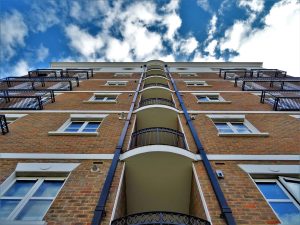
- Balconies
- Flat entrance doors opening onto common parts
The Fire Safety (England) Regulations 2022 introduced additional duties for Responsible Persons across all multi-occupied residential buildings. The regulations also impose enhanced inspection, information-sharing, and cooperation requirements for buildings over 11 metres, with further duties applying to higher-risk residential buildings over 18 metres in height.
In Scotland, fire safety duties are governed by the Fire (Scotland) Act 2005 and the Fire Safety (Scotland) Regulations 2006. Although the legal framework differs, those responsible for fire safety management are still required to assess fire risks and implement appropriate fire precautions within relevant premises.
The Building Safety Act 2022 has also increased regulatory scrutiny around fire safety governance, accountability, and the management of higher‑risk residential buildings across the UK.
To strengthen fire safety compliance, many duty holders appoint a BAFE SP205‑accredited provider.
Need a Fire Risk Assessment?
Osterna delivers professionally accredited Fire Risk Assessments for housing associations, managing agents, and large private landlords across the UK. We are operationally ready to take on new clients.
Who Is the Responsible Person in a Block of Flats?
Under Article 3 of the Regulatory Reform (Fire Safety) Order 2005, the Responsible Person is legally responsible for ensuring a suitable and sufficient fire risk assessment is carried out within the building.
In residential blocks, the Responsible Person is usually the person or organisation with control of the common parts and fire safety arrangements. This often includes:
- Housing associations
- Residential managing agents
- Freeholders
- Resident management companies
- Landlords
- Building owners
The Responsible Person must identify fire risks, implement appropriate fire precautions, and maintain ongoing compliance with current fire safety legislation.
Where multiple parties share responsibility for the building, fire safety duties may overlap. However, shared responsibilities do not remove the legal obligation to ensure fire risks are properly assessed and managed.
Responsible Person Duties: Legal Requirements and Ongoing Obligations
The Responsible Person’s duties include commissioning a suitable and sufficient FRA by a competent person, maintaining fire safety measures, keeping accurate records, reviewing assessments when circumstances change, and evidencing action close‑out.
The Responsible Person must also maintain appropriate fire safety measures throughout the building, including:
- Fire alarm systems
- Emergency lighting
- Fire extinguishers
- Fire doors
- Means of escape
- Compartmentation measures
The Building Safety Act 2022 and wider post‑Grenfell reforms have placed greater scrutiny on fire safety governance, assessor competence, and evidence of completed remedial actions.
Can Responsibility Be Passed to a Managing Agent or Consultant?
Managing agents and specialist fire safety consultants can help manage fire safety compliance, including arranging professional fire risk assessments.
If your organisation controls the premises, regulators are still likely to hold you accountable for:
- Inadequate fire risk assessments
- Poor action tracking
- Delays to remedial works
- Incomplete fire safety records
- Failures in ongoing fire safety management
This is particularly important within large residential portfolios where multiple contractors, consultants, and duty holders may be involved.
Which Parts of a Block of Flats Need to Be Assessed?
Within blocks of flats, fire risk assessments apply primarily to the common parts of the building.
This typically includes:
- Corridors
- Stairwells
- Entrance lobbies
- Plant rooms
- Bin stores
- Roof spaces
- External wall systems
- Shared electrical cupboards
- Means of escape routes
Individual domestic flats are generally excluded from the scope of the Regulatory Reform (Fire Safety) Order 2005. However, the Fire Safety Act 2021 clarified that flat entrance doors and external wall systems fall within scope in England and Wales.
If you manage residential portfolios, maintaining accurate records of which areas are included within the FRA is important during audits, enforcement reviews, and resident complaints investigations.
What Happens If I Don’t Comply?
If fire safety responsibilities within a block of flats are unclear or poorly managed, the consequences can extend far beyond regulatory enforcement.
In England and Wales, Fire and Rescue Services can take enforcement action under the Regulatory Reform (Fire Safety) Order 2005 where suitable fire risk assessments are not in place or fire safety risks are not being managed appropriately.
In Scotland, enforcing authorities can take action under the Fire (Scotland) Act 2005 and the Fire Safety (Scotland) Regulations 2006 where duty holders fail to implement appropriate fire safety measures within relevant premises.
Enforcement action may include:
- Enforcement notices
- Prohibition notices
- Criminal prosecution
- Unlimited fines in serious cases
For housing associations, managing agents, and large private landlords, poor fire safety management can also lead to increased scrutiny from residents and regulators, difficulties demonstrating compliance during audits, and increased insurance and liability exposure.
Managing Fire Safety Compliance and Responsibility Across Your Portfolio
The Responsible Person must ensure a suitable and sufficient fire risk assessment is completed and kept up to date, often involving housing associations, managing agents, freeholders, or landlords where duties overlap.
If you are responsible for fire safety compliance across a residential portfolio and need a trusted, BAFE SP205-accredited provider, Osterna can help.
We work with housing associations, managing agents, and large private landlords across the UK, delivering Fire Risk Assessments, asset testing, fire door inspections, and building compliance services. Get in touch with the Osterna team today.
Frequently Asked Questions
In most residential buildings, the landlord, freeholder, housing association, or managing agent responsible for the common parts arranges and pays for the fire risk assessment. Costs may sometimes be recoverable through service charges, depending on the lease agreement.
The Responsible Person can carry out a fire risk assessment if they have a sufficient understanding of fire safety and are considered suitably qualified and competent to do so.
However, many organisations appoint specialist assessors to help stay compliant and ensure a competent person completes a fire risk assessment that meets current legal and regulatory expectations.
There is no fixed legal expiry date for a fire risk assessment. The Responsible Person must review the assessment regularly and update it whenever significant changes affect the building, occupancy, or fire safety arrangements.
In practice, many organisations adopt a risk-based review programme. Industry guidance (BS9792) generally supports:
- Low-risk residential buildings: review every 2 years, with a new fire risk assessment every 4 years
- Medium-risk residential buildings: annual reviews, with a new fire risk assessment every 3 years
- Higher-risk residential buildings: annual reassessments or more frequent reviews where significant fire safety risks exist
In England and Wales, fire risk assessments for blocks of flats are governed primarily by the Regulatory Reform (Fire Safety) Order 2005, the Fire Safety Act 2021, and the Fire Safety (England) Regulations 2022.
The Regulatory Reform (Fire Safety) Order 2005 requires fire risk assessments to be carried out for all commercial premises and the communal areas of multi-occupied residential buildings, including blocks of flats. In Scotland, fire safety duties are governed by the Fire (Scotland) Act 2005 and the Fire Safety (Scotland) Regulations 2006.
Related articles
-
How Often Do Landlords Need to Renew Their EPC?
Expired EPCs can delay lettings and create avoidable compliance issues, particularly across larger residential portfolios. This article explains when landlords need a new EPC, when early renewal may be worthwhile, and how planned assessments can keep certificates up to date.
-
Who’s Responsible for the EPC – Landlord or Tenant?
Responsibility for obtaining and providing an Energy Performance Certificate (EPC) generally rests with the landlord. This article explains who pays for an EPC, who renews it, tenants’ responsibilities, and how landlords can maintain compliance with current EPC legislation.
-
Where Should Smoke Alarms Be Positioned?
Correct positioning of smoke alarms is essential for reliable fire detection and occupant protection. This guide explains where alarms should be installed, where they should be avoided, the legislation and Building Regulations that influence alarm positioning, and common installation mistakes.
-
Are Fire Risk Assessment Recommendations Mandatory?
Fire Risk Assessment recommendations are not automatically legal requirements, but they should never be dismissed as optional. Responsible Persons should prioritise and manage them and maintain compliance with UK fire safety legislation.
-
Fire Risk Assessment for Block Management
Fire Risk Assessments are a key part of managing fire safety in residential blocks. This guide explains who is responsible, what an assessment should cover and how managing agents and landlords should manage findings across their portfolios.
-
Fire Risk Assessment for High-Rise Buildings
Fire risk assessments for high-rise residential buildings must consider evacuation arrangements, external walls, communal areas and building-specific fire hazards. Assessments should cover and how property and compliance teams can manage findings across complex residential buildings.
-
Fire Risk Assessment for Student Accommodation
Student accommodation presents specific fire safety challenges, from shared kitchens and changing occupancy to evacuation and sleeping risk. A Fire Risk Assessment should cover how universities, landlords and accommodation providers should manage the findings.
-
How to Choose a Fire Risk Assessor
Choosing the right fire risk assessor is essential for effective fire safety management and ongoing compliance. This guide explains what makes a competent fire risk assessor, why experience and third-party certification matter, what questions to ask before appointing a provider, and how to identify a high-quality Fire Risk Assessment.
-
Smoke Vent Testing: A Compliance Guide for Responsible Persons
Smoke vent testing helps verify that Automatic Opening Vents (AOVs) and smoke control systems remain operational throughout the life of a building. This guide explains the legal requirements, British Standards, recommended testing frequencies, Responsible Person duties, and how planned inspection and maintenance support ongoing fire safety compliance.
-
Smoke Alarm Requirements for HMO Landlords
HMO smoke alarm requirements are more complex than those for standard rental properties. This guide explains how HMO fire alarm requirements differ, what landlords need to provide, and how to maintain fire safety compliance.