What Is a Higher-Risk Residential Building?
12 Nov 2026 | By Ron Fellowes MIFSM, GIFireE, CertNCRQ
The Building Safety Act 2022 imposes additional requirements on higher-risk residential buildings. This guide explains the HRB definition, which buildings are included, the responsibilities that apply, and what landlords, building owners and organisations need to know about building safety compliance.
The term higher-risk residential building has become increasingly important following the introduction of the Building Safety Act 2022. Buildings that meet the higher-risk threshold are subject to additional building safety duties designed to improve the management of fire and structural safety risks.
This article explains what a higher-risk residential building is, how higher-risk buildings are identified, and what additional responsibilities apply once a building meets the criteria.
What Is a Higher-Risk Residential Building?
A higher-risk residential building is a building that meets the criteria for a higher-risk building (HRB) under the Building Safety Act 2022 and associated regulations in England.
During occupation, a building generally qualifies as higher-risk if it:
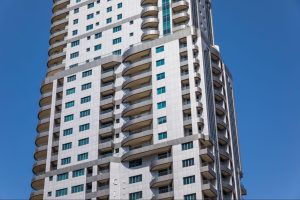
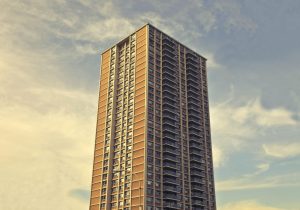
- Is at least 18 metres tall or has seven or more storeys.
- Contains at least two residential units.
- Does not fall within a statutory exclusion.
Buildings meeting the relevant criteria are subject to additional building safety duties overseen by the Building Safety Regulator (BSR).
However, certain properties are excluded from the occupied higher-risk building regime, including those used entirely as hospitals, care homes, hotels, secure residential institutions or certain military accommodation. Hostels and boarding houses providing hotel-type accommodation for leisure or business may also be excluded, depending on their use.
The additional requirements for occupied higher-risk buildings include managing fire and structural safety risks, maintaining the golden thread of information and meeting ongoing building safety management duties.
Is Your Building Classified as Higher-Risk?
If you manage a residential building in England, the following checks can help you determine whether it falls within the occupied higher-risk building regime under the Building Safety Act 2022.
- Check the building’s use: Does it contain at least two residential units? Blocks of flats, certain student accommodation, and mixed-use buildings containing residential units can qualify. Houses in Multiple Occupation (HMOs) may also qualify, depending on their layout and how residential units are defined under the legislation.
- Check its height: Is the building at least 18 metres tall? Height is measured from the lowest adjacent ground level to the top of the floor surface of the highest relevant storey, rather than to the roof.
- Count the storeys: Does the building have seven or more storeys? The regulations specify how storeys must be counted, including exclusions for below-ground storeys and certain rooftop plant areas.
- Check for exclusions: Buildings used entirely as hospitals, care homes, hotels, or certain other excluded uses do not fall within the occupied higher-risk building regime.
A building only needs to meet one of the two height or storey thresholds, alongside the requirement for at least two residential units, provided no statutory exclusion applies.
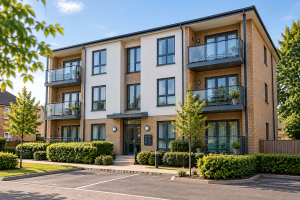
For example, a six-storey residential building measuring 18.5 metres can qualify, even though it has fewer than seven storeys. Similarly, a seven-storey residential building measuring 17 metres can qualify.
What if Your Building Is Close to the Threshold?
Buildings with complex layouts or architectural features, such as sloping ground levels, mezzanines, rooftop structures, or connected buildings, may require closer assessment. These features can affect how building height is measured and storeys are counted under the relevant regulations.
Where a building is close to the 18-metre or seven-storey threshold, check its measurements against the statutory rules rather than relying solely on existing property records. If its classification remains unclear, seek professional advice to establish whether the higher-risk building regime applies.
Why Are Higher-Risk Buildings Treated Differently?
Higher-risk residential buildings can present more complex fire and structural safety challenges than lower-rise properties. Their size, height, occupancy, and construction can make evacuation, emergency response, inspection, and ongoing maintenance more complex.
The Building Safety Act 2022 recognises these additional risks by introducing greater oversight of how higher-risk buildings are managed throughout their lifecycle. Organisations responsible for these buildings are expected to maintain accurate building safety information, engage with residents, actively manage safety risks, and demonstrate that appropriate measures are in place.
The legislation does not replace existing fire safety requirements. Instead, it builds on them by adding responsibilities for those managing higher-risk residential buildings, aiming to improve accountability and reduce the likelihood of fire and structural safety failures.
How Do Higher-Risk Buildings Differ from High-Rise Buildings?
The Building Safety Act 2022 and the Fire Safety (England) Regulations 2022 use similar height thresholds, but they establish different legal duties.
| Regime | Building threshold | Main requirements |
| Building Safety Act 2022 – occupied higher-risk buildings | At least 18 metres or seven storeys, with at least two residential units, subject to exclusions | Registration, building safety risk management, safety cases, golden thread information, and resident engagement duties |
| Fire Safety (England) Regulations 2022 – high-rise residential buildings | At least 18 metres or seven storeys, with two or more sets of domestic premises | Additional fire safety duties, including providing building information to fire and rescue services, secure information boxes, wayfinding signage, and checks of firefighting equipment |
| Fire Safety (England) Regulations 2022 – buildings over 11 metres | Multi-occupied residential buildings over 11 metres in height | Quarterly checks of communal fire doors and annual checks of flat entrance doors, using best endeavours for the latter |
A building may fall into more than one category, meaning different legal duties can apply at the same time. For more information about fire safety requirements, read our guide to Fire Risk Assessments for high-rise buildings.
The height measurement rules differ across regimes, so buildings close to a threshold should be assessed against the relevant legislation.
Which Buildings Are Included or Excluded?
Not every tall building falls within the higher-risk building regime. The requirements depend on the building’s use and whether it is being designed, constructed, or occupied.
The table below summarises how different building types are treated, assuming they meet the 18-metre or seven-storey threshold.
| Building type | During occupation | During design and construction |
| Blocks of flats and apartment buildings | Included where there are at least two residential units | Included where there are at least two residential units |
| Mixed-use buildings containing residential accommodation | Included where there are at least two residential units | Included where there are at least two residential units |
| Student accommodation, including university halls | Can be included where there are at least two residential units | Can be included where there are at least two residential units |
| Care homes | Excluded where the building is used entirely as a care home | Included |
| Hospitals | Excluded where the building is used entirely as a hospital | Included |
| Hotels and hostels used for leisure or business accommodation | Excluded where the building is used entirely for this purpose | Excluded |
| Secure residential institutions, including prisons | Excluded where the building is used entirely for this purpose | Excluded |
| Military barracks and specified military accommodation | Excluded | Excluded |
| Buildings containing only one residential unit | Not included on residential-use grounds | Not included on residential-use grounds |
Student accommodation should not automatically be treated as exempt. University halls and shared student accommodation can contain residential units under the legislation, even where residents share kitchens or bathrooms.
Buildings outside the higher-risk regime may still have duties under the Regulatory Reform (Fire Safety) Order 2005 and other relevant legislation.
What Additional Responsibilities Apply?
Once a building is classified as a higher-risk residential building, those responsible for managing it must comply with additional duties under the Building Safety Act 2022.
These responsibilities aim to improve accountability, strengthen management of fire and structural safety risks, and ensure accurate building safety information is maintained throughout the building’s lifecycle.
Key responsibilities include:
Registration with the Building Safety Regulator
The Building Safety Regulator (BSR) oversees the safety and performance of occupied higher-risk residential buildings in England.
Identifying the Accountable Persons
An Accountable Person (AP) is an individual or organisation that meets the statutory criteria through ownership of, or qualifying legal repairing obligations for, a higher-risk building’s common parts. These include the building’s structure and exterior, subject to specified exceptions, and areas shared by residents of more than one residential unit.
Maintaining the Golden Thread
A Golden Thread of Information must be maintained, providing an accurate and up-to-date digital record of the building, its construction, maintenance, and the measures used to manage fire and structural safety risks.
Preparing and Maintaining a Safety Case
Higher-risk residential buildings must have a Safety Case that demonstrates how building safety risks are being identified, assessed, and managed. This helps show that appropriate measures are in place to reduce the risks of fire and structural failure.
Managing Building Safety Risks
Organisations must identify, assess, and manage building safety risks on an ongoing basis, while maintaining appropriate records, reviewing safety arrangements, and engaging with residents where required.
Engaging with Residents
Residents should be provided with relevant building safety information and opportunities to raise concerns about the management of building safety. Clear communication forms an important part of the Building Safety Act’s approach to improving accountability and transparency.
Do You Need Building Control Approval for Work on an Existing Higher-Risk Building?
Building work on an existing higher-risk building (HRB) requires Building Safety Regulator (BSR) approval before work begins, unless an exemption or specified exception applies. This can include alterations to active fire safety systems, passive fire protection, escape routes, internal layouts, and certain remediation works.
Not every repair or maintenance task requires approval. Before commissioning work, property managers should confirm whether it falls within building control requirements and obtain any necessary approval. Fire Risk Assessments, fire door inspections, and compartmentation surveys can help identify defects and inform remedial work, but do not replace statutory building control approval.
For further details, see the government’s guidance on building control approval for higher-risk buildings.
What Does This Mean for Property Managers?
Managing a higher-risk residential building requires a coordinated compliance approach rather than a series of standalone inspections.
In practice, this means ensuring there are effective processes for:
- Commissioning and reviewing Fire Risk Assessments
- Coordinating fire door inspections and compartmentation surveys
- Managing remedial works through to completion
- Keeping building safety information accurate and up to date
- Maintaining inspection, testing, and maintenance records
- Supporting resident engagement and communication
- Working closely with the Accountable Person and other duty holders where responsibilities are shared
For many organisations, these activities form part of an ongoing building safety management programme that brings together inspections, maintenance, compliance, and record-keeping to support the safe management of higher-risk residential buildings.
Need Support Managing a Higher-Risk Residential Building?
Osterna supports housing associations, managing agents, local authorities, freeholders, and large private landlords with Fire Risk Assessments, fire door inspections, compartmentation surveys, and wider fire safety compliance services across the UK.
We help organisations understand their responsibilities and manage building safety across residential portfolios.
Manage Higher-Risk Buildings with Confidence
Higher-risk residential buildings are subject to additional duties under the Building Safety Act 2022, but the underlying objective remains the same: to understand building safety risks and manage them effectively throughout the building’s lifecycle.
Accurate building information, suitable Fire Risk Assessments, regular inspections, and effective maintenance all play an important role in protecting residents and demonstrating compliance.
If your organisation is responsible for a higher-risk residential building and needs support with Fire Risk Assessments, fire door inspections, compartmentation surveys, or wider fire safety compliance, speak to the Osterna team.
Frequently Asked Questions
The Building Safety Act 2022 introduced a more stringent regime for higher-risk buildings, with requirements coming into force in stages. These include Building Safety Regulator oversight, registration of occupied HRBs and ongoing duties for Accountable Persons and Principal Accountable Persons.
Further changes in 2026 include updated guidance for building control approval on existing HRBs and the introduction of the Building Safety Levy from 1 October 2026.
In many cases, yes. Building control approval from the Building Safety Regulator is required before carrying out building work on an existing higher-risk building, unless the work falls within an exemption or another specified exception.
This can include work involving active or passive fire safety measures, changes to escape routes and certain remediation work. The proposed work must demonstrate compliance with the relevant building regulations before approval is granted.
The Building Safety Levy mainly applies to developments creating new homes or purpose-built student accommodation, rather than the routine management, maintenance or repair of existing higher-risk buildings (HRBs).
Introduced in England on 1 October 2026, the levy applies to certain residential developments, including some conversions and extensions. Existing HRBs are not automatically subject to the levy, but liability depends on the proposed work, the relevant building control application and any exemptions. See the government’s Building Safety Levy guidance for details.
A residential building below 18 metres may still fall within the higher-risk building regime if it has at least seven storeys and meets the other relevant criteria. Buildings that fall below both thresholds are generally outside the specific HRB regime.
However, this does not mean they are outside building safety requirements altogether. Other provisions of the Building Safety Act, building regulations and fire safety legislation may still apply depending on the building and the work being carried out.
No. The specific requirements for higher-risk buildings only apply to buildings that meet the relevant legal criteria. Different requirements also apply during design and construction and during occupation.
Buildings outside the HRB regime can still be affected by wider provisions introduced by the Building Safety Act and remain subject to other building regulations and fire safety requirements.
Related articles
-
What Buildings Does the Building Safety Act 2022 Apply To?
The Building Safety Act does not apply the same requirements to every building. This guide explains the scope of the Act, the higher-risk building definition, key height thresholds and how requirements differ between occupation, construction and other parts of the legislation.
-
Building Safety Act: What Housing Associations Need to Know
The Building Safety Act has introduced significant responsibilities for organisations that own and manage residential buildings. This guide explains what housing associations need to know about higher-risk buildings, Accountable Persons, Responsible Persons, building safety information, resident engagement and ongoing compliance.
-
Why Is the Golden Thread Important?
The golden thread of information is a legal requirement for higher-risk buildings in England under the Building Safety Act 2022. It ensures building safety information is maintained and accessible throughout a building’s lifecycle.
-
What Is the Building Safety Act 2022?
The Building Safety Act 2022 introduced significant reforms to building safety in England. This guide explains the Act, the duties it introduced, how it affects higher-risk residential buildings, and what it means for organisations responsible for managing them.
-
How Do I Get a Fire Risk Assessment Certificate?
There is no official fire risk assessment certificate under UK fire safety legislation. This guide explains what documentation you should receive after a Fire Risk Assessment, what an FRA certificate really means, and how to demonstrate compliance.
-
What Is a Suitable and Sufficient Fire Risk Assessment?
A suitable and sufficient Fire Risk Assessment should provide more than evidence of compliance. This guide explains the legal standard, what a high-quality assessment should include, how to recognise common shortcomings, and the responsibilities of the Responsible Person.
-
EPC Requirements for Landlords
Most landlords in England and Wales must hold a valid Energy Performance Certificate (EPC) before letting residential property and comply with the Minimum Energy Efficiency Standards (MEES). This article explains current EPC requirements, minimum EPC ratings, exemptions, proposed changes, and how professional EPC assessments support ongoing compliance.
-
How Often Do Landlords Need to Renew Their EPC?
Expired EPCs can delay lettings and create avoidable compliance issues, particularly across larger residential portfolios. This article explains when landlords need a new EPC, when early renewal may be worthwhile, and how planned assessments can keep certificates up to date.
-
Who’s Responsible for the EPC – Landlord or Tenant?
Responsibility for obtaining and providing an Energy Performance Certificate (EPC) generally rests with the landlord. This article explains who pays for an EPC, who renews it, tenants’ responsibilities, and how landlords can maintain compliance with current EPC legislation.
-
Are Fire Risk Assessment Recommendations Mandatory?
Fire Risk Assessment recommendations are not automatically legal requirements, but they should never be dismissed as optional. Responsible Persons should prioritise and manage them and maintain compliance with UK fire safety legislation.